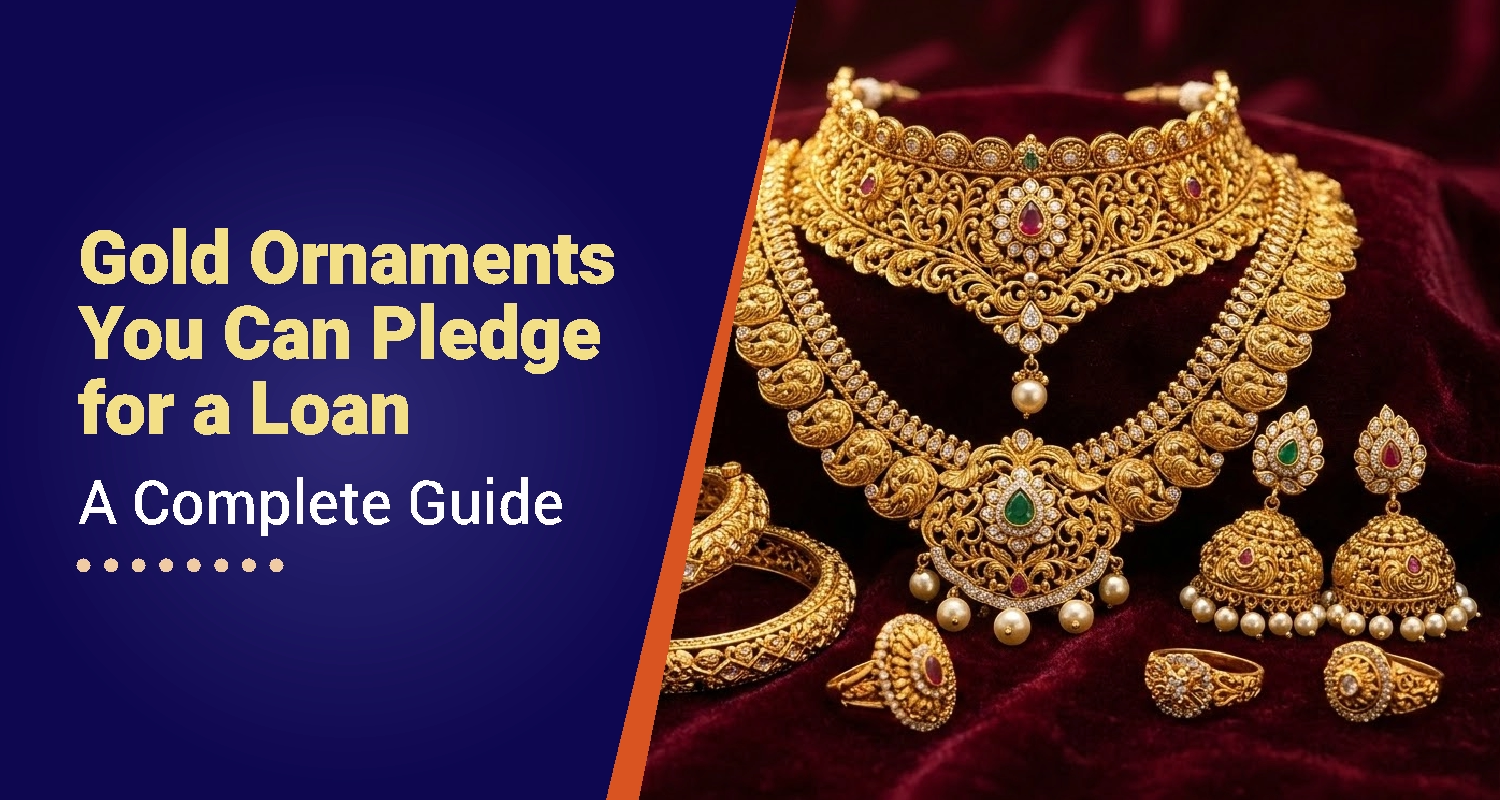
Gold Ornaments You Can Pledge for a Loan: A Complete Guide
Table of Contents
In Indian households, gold always holds financial and emotional value. Also, gold serves as a reliable financial asset that can help individuals and small business owners access funds quickly when required. By pledging the gold ornaments that they own, borrowers can unlock the value of their jewellery without selling it. However, banks and NBFCs who offer various gold loan schemes don’t accept all gold items. Factors such as purity, alloy composition, and ornament type directly influence the loan amount. It is essential for you to know if you can pledge gold ornaments for a loan so that you can maximise the financial benefit while keeping your valuable assets safe.
Most of the NBFCs and banks make the process simple with quick loan approval, minimal documentation, and secure handling of pledged gold ornaments. This ensures borrowers receive financial support while retaining ownership of their jewellery.
Gold Ornament Eligibility: Purity, Forms and Ownership Requirements
Lenders of gold loans do not qualify for all gold items equally when you are applying for a loan. Banks and NBFCs evaluate specific criteria to determine which gold ornaments eligible for a loan. The most important factor for availing the gold loan is purity. Typically, gold ornaments between 18 karats and 22 karats are accepted, as they contain sufficient gold content to support accurate valuation.
Borrowers often find it difficult to identify if they can pledge gold ornaments for a loan. The answer includes commonly owned jewellery such as chains, rings, bangles, necklaces, and earrings. These ornaments are preferred because their gold content can be easily tested and valued.
Ownership of gold is another essential requirement to avail a gold loan. Only legally owned gold ornaments are eligible for a gold loan by the borrower. Sometimes, lenders may request identification and basic verification of gold ownership to ensure transparency and compliance.
In general, gold loan lenders prefer gold ornaments over gold bars or raw gold because the purity of jewellery is easier to evaluate and store securely, and they can process the early release of gold upon repayment. With lenders like IIFL Finance, borrowers benefit from attractive interest rates*, no hidden charges*, and quick and easy disbursals, making gold loans a practical financial solution.
Understanding Gold Alloy Composition in Gold Ornaments
If the gold is in its purest form (24 karats), it is not suitable for making ornaments, as gold will be soft when it is 99.99% pure. To improve the strength and durability of 24 karat gold, it is mixed with other metals, forming a gold alloy. This alloy composition helps create durable ornaments while maintaining valuable gold content.
When borrowers pledge gold ornaments, lenders assess both the total weight and the actual gold content to analyze if the gold ornaments are eligible for a gold loan. As alloys are compositions of additional metals, the valuation focuses only on the gold portion, not the entire ornament weight.
In general,
- 22K gold contains approximately 91.6% pure gold
- 18K gold contains approximately 75% pure gold
The higher the purity of gold, the higher the loan amount that can be offered against it. Banks and NBFCs follow standard appraisal procedures to assess the purity and net weight of the gold pledged. As per Reserve Bank of India (RBI) guidelines, lenders can offer a loan of up to 75% of the gold’s assessed value. This percentage is known as the Loan-to-Value (LTV) ratio.
For better valuation and financial flexibility, it is better that borrowers understand the composition of alloys that they plan to pledge gold ornaments against the gold loan.
Common Metals Used in Gold Alloys for Ornaments
Gold is mixed with various other metals to improve durability and enhance appearance. These include:
- Copper – when gold is mixed with copper, gold changes to a slightly reddish tone, and gold strength improves. If the copper content is higher, overall gold percentage will be less, which may slightly lower the loan's valuation.
- Silver – the addition of silver to gold improves flexibility and makes gold shine. This combination supports durability while maintaining better purity levels.
- Zinc – The combination of zinc and gold enhances hardness and prevents damage to the ornament. However, this combination yields less value to the gold during appraisal.
- Nickel – The gold and nickel mixture provides strength and gives a lighter colour tone. The presence of nickel in gold affects the overall purity calculation during gold loan assessment.
During the gold appraisal process, lenders evaluate the purity of the pledged gold ornaments which are eligible for gold loan carefully using specialised techniques. The final loan value is decided by the quantity of pure gold in the ornament.
Types of Gold Ornaments You Can Pledge for a Loan
Gold loan borrowers are often not sure if the gold ornaments are eligible for a gold loan to receive optimal value. Most personal gold jewellery items are accepted, provided they meet the lender’s requirements of gold purity and ownership.
Commonly accepted gold ornaments include:
1. Chains
Gold chains are widely accepted because they are easy to assess the value and contain consistent gold purity and are easy to assess.
2. Bangles and Bracelets
These ornaments often have substantial gold weight, making them suitable for higher loan eligibility.
3. Rings
Gold rings, including wedding rings and traditional rings, are commonly pledged gold ornaments for loans.
4. Necklaces
Necklaces typically contain significant gold content and are preferred by lenders for their higher valuation potential.
5. Earrings
Even smaller ornaments like earrings are accepted if they meet purity requirements.
6. Gold Coins (where applicable)
Certain lenders accept gold coins based on purity standards issued by authorised entities.
7. Traditional Jewellery
Traditional gold items such as mangal sutras, temple jewellery, and cultural ornaments are also accepted if they meet the eligibility criteria.
Most lenders prefer these ornaments because they are easy to evaluate and securely store and consider these gold ornaments as eligible for gold loan. Borrowers can benefit from pledged gold ornaments, as the funding is secured, the release of gold over repayment is easy, and the loan approval process is quick, ensuring a smooth borrowing experience.
How Gold Ornament Purity and Alloy Affect Gold Loan Amount
The loan amount in a gold loan primarily depends on three key factors:
- Gold weight
- Gold purity (karats value)
- Current market gold rate
Example Calculation
Let us consider the following example:
- Weight of gold ornament: 50 grams
- Purity: 22K (91.6% gold)
- Gold rate: ₹5,500 per gram
Actual gold content calculation:
50 grams × 91.6% = 45.8 grams pure gold
Gold value:
45.8 × ₹5,500 = ₹251,900
Eligibility for a gold loan depends on the loan-to-value ratio (up to permitted limits). This ensures borrowers receive maximum value for gold* while maintaining regulatory compliance by the Reserve Bank of India.
The higher the purity of ornaments, the higher the loan eligibility. This is why choosing appropriate ornaments when you pledge gold ornaments helps you maximise your borrowing capacity.
Why Understanding Gold Alloy and Ornament Type Matters for Gold Loans
There are several important benefits of knowing the purity and composition of your jewellery before applying for a gold loan.
Borrowers can choose the ornaments that are of high financial value if they understand the composition of the gold ornaments that are eligible for loans.
Key Benefits of Choosing High-Purity Ornaments
- Higher Loan Amount Eligibility
If the gold contains more actual gold content, the total loan value increases.
- Accurate and Transparent Valuation
By understanding the gold composition, borrowers can verify appraisal accuracy and maintain trust.
- Better Loan-to-Value Ratio
As per the loan-to-value ratio standards, gold of highest purity yields better loan value
- Smooth Loan Approval Process
The loan approval process and disbursement can be quick if the gold is maintained properly
- Financial Flexibility Without Selling Gold
Borrowers retain ownership while meeting financial needs.
- Secure Storage of Gold
All the lending partners ensure that pledged gold ornaments are secured and safe throughout the loan tenure.
- Flexible Repayment Options
As the gold loan offers zero foreclosure charges*, borrowers avail themselves of the benefit of early closure if required.
- Easy Release After Repayment
Once repayment is complete, easy release of gold ensures borrowers regain possession without complications.
Understanding gold alloy composition and selecting appropriate jewellery ensures borrowers receive optimal benefits when applying for a gold loan.
Conclusion
Gold loans provide a dependable financial solution for individuals who wish to access funds without selling their valuable jewellery. Understanding which gold ornaments are eligible for a gold loan helps borrowers maximise loan value and ensure a smooth borrowing experience. By selecting high-purity ornaments and understanding alloy composition, borrowers can receive better valuation and financial flexibility.
With IIFL, borrowers benefit from attractive interest rates*, no hidden charges*, quick loan approval, minimal documentation, and secure storage. Combined with easy release of gold and zero foreclosure charges*, Gold Loans offer a reliable and borrower-friendly financial option.
Frequently Asked Questions
What types of gold ornaments are eligible for a gold loan?
Most personal gold jewellery items, such as chains, rings, bangles, necklaces, and earrings, are eligible for gold loan. These ornaments typically meet purity standards and are easy to evaluate. Lenders prefer jewellery because it allows accurate valuation, secure storage, and reliable loan assessment, helping borrowers access funds conveniently.
Which gold can I pledge for a loan if it contains alloy?
Gold ornaments containing alloy metals such as copper or silver can still be pledged. Lenders calculate the loan amount based on actual gold content, not the total ornament weight. Higher purity ornaments provide better valuation, while alloy metals are excluded during gold value calculation.
Does gold purity affect the loan amount when I pledge gold ornaments?
Yes, purity directly affects the loan amount. Higher carat gold contains more pure gold, which increases valuation. For example, 22K gold provides higher loan eligibility compared to 18K gold. Lenders assess purity carefully to determine accurate loan value and eligibility of the pledge gold ornaments.
Can damaged or old gold ornaments be pledged for a loan?
Yes, damaged or old gold ornaments are generally accepted if they meet purity requirements. Physical condition does not significantly affect valuation, as lenders assess gold content rather than appearance. Hence borrowers can use this gold ornaments eligible for gold loan and utilise unused or old jewellery to meet financial needs.
How is gold alloy tested during gold loan appraisal?
Lenders use specialised testing methods such as carat metres and density checks to determine gold purity. These methods ensure accurate valuation by identifying actual gold content and excluding alloy metals. This process ensures transparency and fair loan eligibility for borrowers.
Disclaimer : The information in this blog is for general purposes only and may change without notice. It does not constitute legal, tax, or financial advice. Readers should seek professional guidance and make decisions at their own discretion. IIFL Finance is not liable for any reliance on this content. Read more