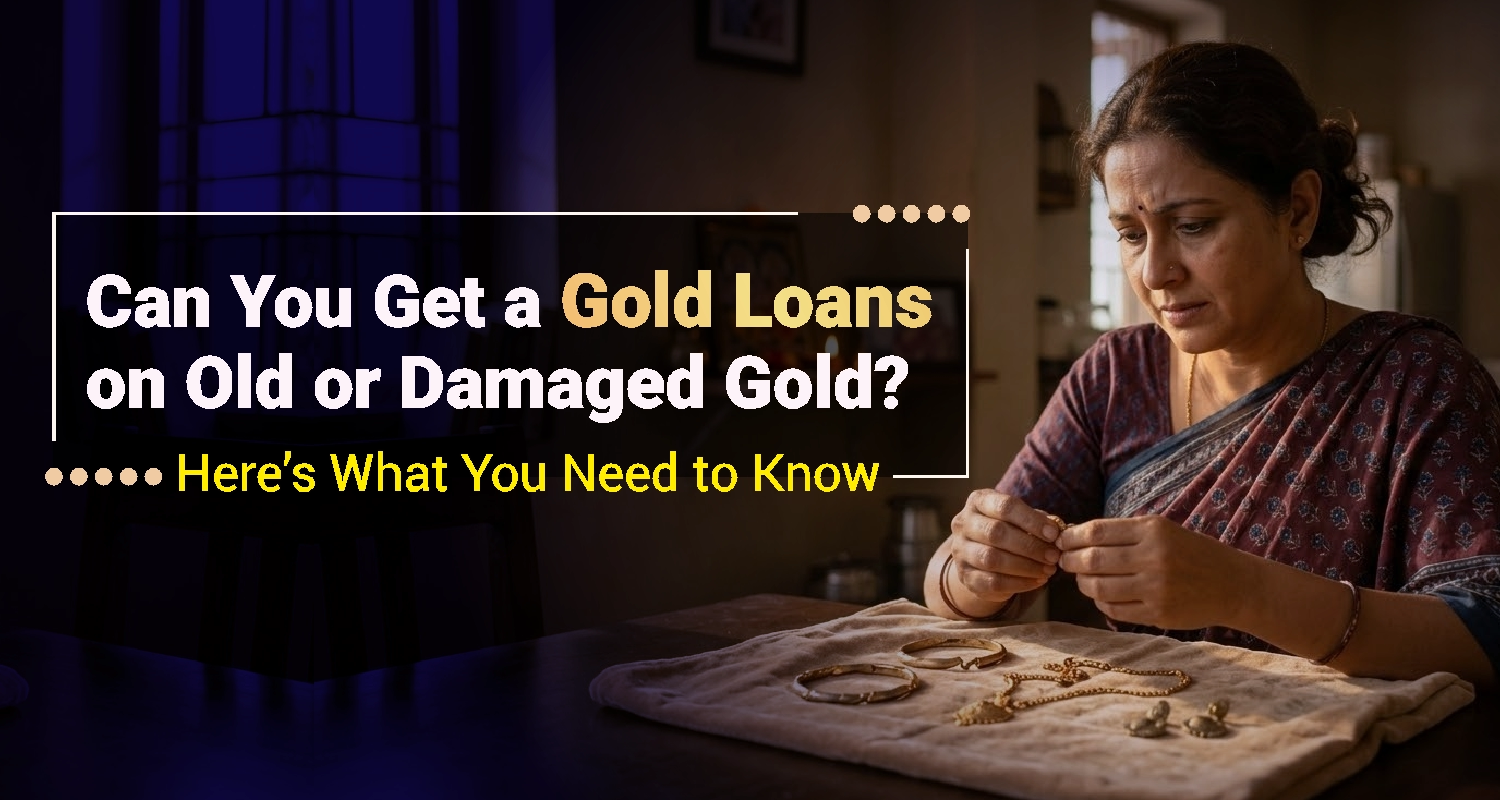
Can You Get a Gold Loan on Old or Damaged Gold? Here’s What You Need to Know
Table of Contents
Introduction to Gold Loan on Old or Damaged Gold
In Indian households, gold has long held a special place, often passed down through generations as ornaments, heirlooms, or investments. Many families possess jewellery that is old, broken, or no longer in use. A common question arises during urgent financial needs: Can I pledge old gold for loan? In most cases, the answer is yes. Banks and NBFCs like IIFL Finance primarily assess the gold pledged by a borrower based on its purity and net weight, rather than its design or condition. In simple terms, even a worn-out ornament or a damaged chain may still qualify for a gold loan.
For individuals or small and medium business owners facing immediate financial requirements, a gold loan for damaged gold or unused jewellery can be a practical financing option. Households can access quick liquidity by unlocking the value of old ornaments without selling their hereditary assets outright. When understanding what is considered old or damaged gold for a gold loan, it is important to note that lenders focus more on gold content than appearance. In essence, pledging old or damaged gold can serve as a dependable resource to meet short-term expenses while retaining ownership of the asset.
What Is Considered Old or Damaged Gold for a Gold Loan?
It is important to understand what lenders consider “old” or “damaged” gold when applying for a gold loan from reputed banks and NBFCs. Broken, dented, scratched, outdated, or worn jewellery is generally treated as eligible, provided it meets purity standards. Even ornaments with loose settings or missing stones may qualify as collateral.
Many borrowers hesitate, wondering, “Can I pledge old gold for loan?” The answer depends primarily on intrinsic gold content. Lenders do not assess jewellery based on design, trend, or resale appeal. Instead, eligibility is determined by purity (karat value) and net gold weight after excluding stones or non-gold components.
If the pledged ornament meets required standards, a gold loan for damaged gold can be sanctioned under standard eligibility norms.
Types of Gold Accepted for a Gold Loan Including Old & Damaged Gold
The Reserve Bank of India (RBI) has prescribed regulatory norms for banks and NBFCs offering gold loans, including guidelines on loan-to-value (LTV) ratios and purity assessment. Lenders may accept different forms of gold, provided they meet required purity standards. However, in rare cases, a gold ornament may be rejected if its purity cannot be verified or if the recoverable gold content does not meet lender criteria.
Most Accepted Forms of Gold for a Gold Loan
Broken or chipped jewellery
Snapped chains, cracked bangles, bent rings, or structurally damaged ornaments can still qualify for a gold loan. The valuation of gold for gold loan purposes is based on purity and recoverable gold content rather than appearance.
Old-fashioned or antique ornaments
Outdated designs or unused jewellery still retain intrinsic value. Based on prevailing bullion rates, such pieces can be pledged if they meet purity norms.
Damaged coins or bars
Gold coins or bars with minor dents or surface scratches are generally acceptable, subject to lender policies and purity verification.
Heirloom or inherited jewellery
Traditional family ornaments showing signs of ageing can still be eligible if they satisfy purity benchmarks.
In all these cases, the value of the gold loan for damaged gold depends on measurable gold content, not cosmetic condition. This makes gold loans a practical financing option for households in semi-urban and rural areas, where traditional jewellery often acts as a financial safety net and enables borrowers to get quick access to funds against old gold without selling their assets.
How Purity and Weight Are Assessed for Old or Damaged Gold Loans
As per standard regulatory norms, banks and NBFCs follow a transparent evaluation process to determine the eligible gold loan amount. When a borrower pledges damaged jewellery, visible wear may create uncertainty, but valuation is based on measurable gold content rather than appearance.
Assessment Process
Karat Testing
Gold purity is measured in karats (such as 18K, 22K, etc.). Higher purity generally results in higher loan eligibility. For clarity, 24K indicates 99.9% purity, 22K indicates 91.6% purity, and 18K indicates 75% purity.
XRF Machine Testing
Many institutions use advanced X-Ray Fluorescence (XRF) machines to analyse the exact composition of the ornament without causing damage.
Acid Test (if required)
In certain cases, traditional acid testing methods may be used to verify authenticity and purity.
Deduction for Alloys and Impurities
Old jewellery often contains alloys such as copper or silver for strength. The weight of soldering joints, embedded stones, and other non-gold components is deducted to calculate the net gold weight.
Based on the purity and net weight, the eligible loan amount is calculated using prevailing gold prices and regulatory Loan-to-Value (LTV) norms prescribed by the Reserve Bank of India (RBI). This systematic process ensures that even old or damaged ornaments can serve as reliable collateral for a gold loan for damaged gold.
How Old or Damaged Gold Impacts Your Gold Loan Value
A common concern among borrowers seeking short-term funds through a gold loan for damaged gold is whether visible damage reduces the loan amount. Cosmetic wear usually does not significantly affect valuation. Instead, the following factors determine the final loan value:
Impact of Purity Reduction Due to Gold Alloy
Lower purity (for example, 18K instead of 22K) means reduced gold content, directly affecting loan eligibility.
Weight Loss Due to Damage or Joints
Broken links, hollow designs, or heavy soldering joints may reduce the net gold weight after deductions.
Role of Current Gold Prices
The sanctioned amount depends on the prevailing market rate of gold on the day of valuation.
LTV Limits Set by RBI
The Reserve Bank of India (RBI) permits lenders to offer loans up to a specified percentage of the assessed gold value (currently up to 75%), ensuring responsible lending practices.
Why Old Gold Still Offers Instant Liquidity
Since valuation is based on measurable gold content rather than cosmetic condition, even aged jewellery can unlock meaningful funds. Borrowers can confidently pledge old ornaments to access liquidity without selling their assets.
In essence, the age or physical condition of jewellery rarely diminishes its financial utility. For families in smaller towns and semi-urban areas, gold continues to serve as a dependable source of emergency funding.
Benefits of Taking a Gold Loan on Old or Damaged Gold
- Instead of selling unused jewellery, choosing to pledge it offers several advantages. If you are wondering, can I pledge old gold for loan? instead of letting it remain idle, the following benefits may help you decide:
Quick access to funds on old gold
- With fast approval and easy disbursal, gold loans help borrowers get instant cash on old gold to address urgent financial needs efficiently.
No impact of jewellery appearance
- Scratches, dents, or outdated designs generally do not affect eligibility if required purity standards are met.
Minimal documentation
- The process typically requires basic KYC documents, making it accessible to a wide range of borrowers.
Gold pledged is secured
- Your pledged jewellery is stored securely throughout the loan tenure, as per lender policies.
Flexible repayment options
- Borrowers can choose repayment structures aligned with their cash flow.
No major credit score dependency
- Since the loan is secured against gold, approval is primarily based on collateral value rather than credit profile.
Zero foreclosure charges*
- Borrowers may close the loan early without foreclosure penalties, subject to applicable terms and conditions.
Easy release of gold
- Once repayment is completed, the pledged jewellery is returned as per lender procedures.
Conclusion
To conclude, the answer to “Can I pledge old gold for loan?” is generally yes. Financial institutions provide gold loans for damaged gold as long as the jewellery meets required purity standards. Minor scratches, broken clasps, or outdated designs typically do not affect eligibility. Lenders primarily assess weight and karat value rather than appearance.
For individuals seeking quick access to funds against old gold, pledging unused jewellery can be a practical and secure way to manage short-term financial requirements without selling cherished assets.
Frequently Asked Questions
Can I pledge old gold for a loan even if it is broken?
Yes, broken jewellery is usually accepted, provided it meets the lender’s purity standards. The valuation focuses on net gold weight and karat value rather than physical condition. Minor structural damage does not automatically disqualify the ornament from loan eligibility.
Is a gold loan available for heavily damaged or worn-out gold?
A gold loan for damaged gold is generally available if the core gold content remains intact. Even heavily worn jewellery can qualify after proper purity testing and deduction of non-gold components. The final loan amount depends on net recoverable gold value.
Does gold alloy content reduce the gold loan amount?
Yes. Since jewellery contains gold alloy for strength, the lender deducts the weight of non-gold metals during evaluation. Lower purity results in a proportionate reduction in eligible loan value.
How quickly can I get instant cash on old gold?
Once the gold is evaluated and documentation is completed, lenders typically provide quick loan approval followed by quick and easy disbursals. The exact timeline may vary depending on verification procedures and branch operations to get quick access to funds against your old gold jewellery.
Is there a difference in interest rates for old gold loans?
No. Interest rates are generally determined by the lender’s policy and loan scheme, not by whether the jewellery is old or new. As long as the purity standards are met, the pricing structure remains consistent to avail a gold loan for damaged gold or old gold.
Disclaimer : The information in this blog is for general purposes only and may change without notice. It does not constitute legal, tax, or financial advice. Readers should seek professional guidance and make decisions at their own discretion. IIFL Finance is not liable for any reliance on this content. Read more