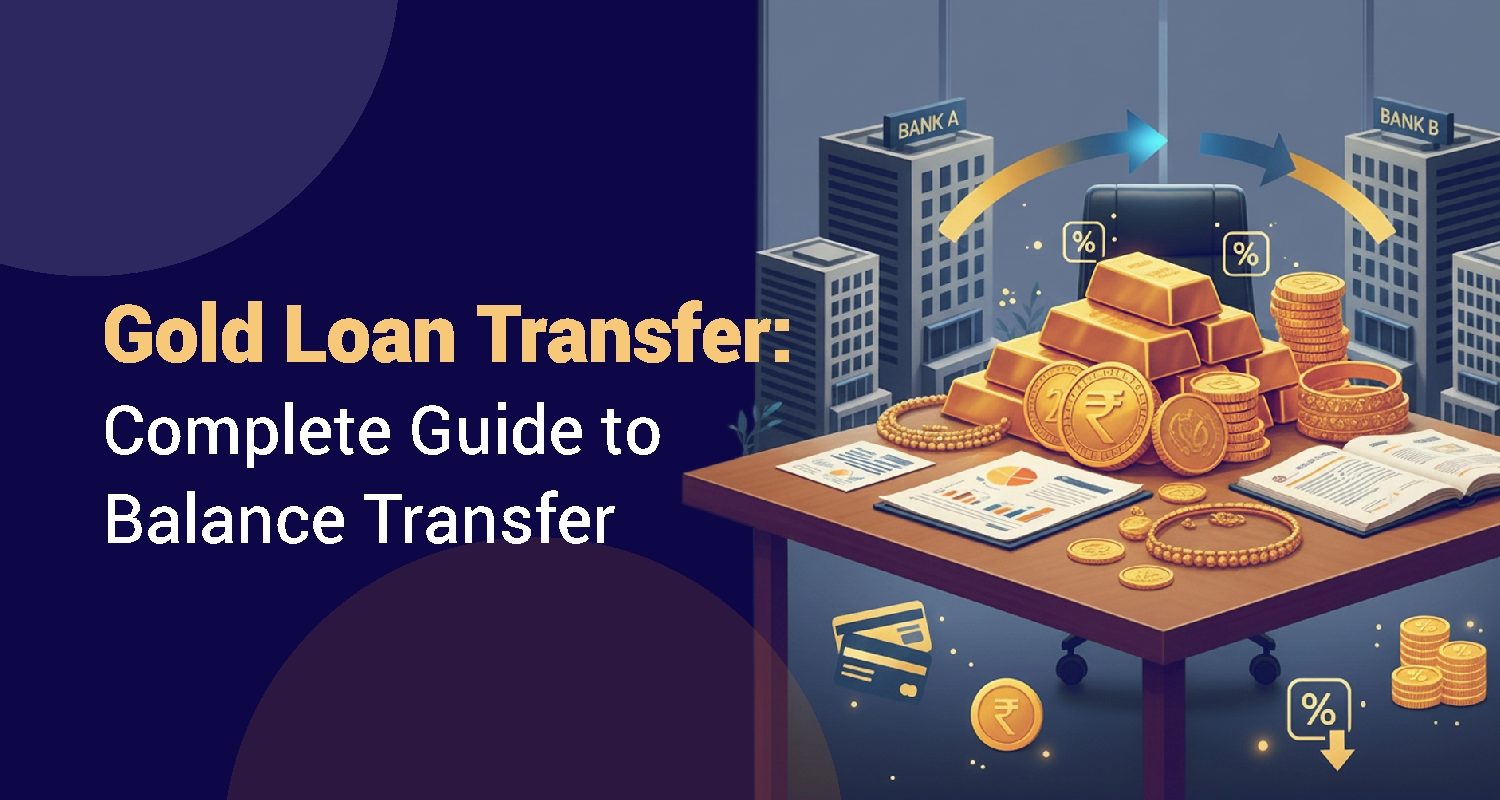
Gold Loan Transfer: Complete Guide to Balance Transfer
Table of Contents
India is known for its tradition of passing down gold ornaments and jewellery from one generation to the next. As a result, using gold as collateral to obtain funds is the most feasible borrowing mode for most citizens in the country.
However, people often apply for gold loans without doing their due diligence first. This can lead to choosing a lender that doesn’t offer the best terms. In such cases, a gold loan transfer can help reduce EMI costs and even get you a higher payout for your gold.
What Is A Gold Loan Transfer?
A gold loan transfer refers to the process of transferring an existing gold loan from one lender to another for more favourable terms. Since many Indians use gold jewellery as collateral, gold loans have become a popular way to access quick funds. However, not all lenders provide the same benefits; interest rates, loan-to-value ratios, repayment flexibility, and security features can vary widely.
By transferring your gold loan, you may secure a lower interest rate, extend your repayment tenure, or even get a higher loan amount if gold prices have risen. Some borrowers also switch lenders for better customer service and added convenience. With multiple banks and NBFCs offering gold loans today, you have the flexibility to choose a lender that better suits your financial needs. That said, not every lender offers transfer facilities, so it’s important to weigh the pros and cons before making the move.
Steps to Transfer Your Gold Loan to IIFL Finance
IIFL Finance is one of the best lenders for gold loan transfer, as it offers low-interest rates, high loan-to-value ratios, flexible repayment options, no processing fees, and insurance cover for your gold. If you want to transfer your gold loan to IIFL Finance, you need to follow these simple steps:
- Provide your existing pledge card to IIFL Finance to start the gold loan transfer process.
- Receive a savings report from IIFL Finance that shows you how much you can save by transferring your gold loan to them. Review and approve the report.
- Complete the KYC process with IIFL Finance to finalize the gold loan transfer.
- Pay the outstanding interest to your previous lender to release your gold to IIFL Finance.
- Enjoy the benefits of gold loan transfer with IIFL Finance.
Top Reasons to Transfer Your Gold Loan
The advantages include:1. Reduction In Interest:
Many lenders charge higher Gold Loan EMI than their competitors. Borrowers can choose a lender with a lowest gold loan interest rate by transferring their loans, making the process of paying a loan much easier.
2. An Increased Rate Per Gram:
Financial institutions offer loans anywhere upto 75% of the gold loan value. If you’re getting a lower value for your gold, moving the loan to a provider offering a higher loan-to-value (LTV) ratio is a great option.
3. Better Terms:
Gold loan transfer offers a possibility to get better loan features, including flexible repayment terms and no processing fees.
4. Improved Security And Insurance Facilities:
Some borrowers may be dissatisfied with the security for their gold provided by their current lender. Therefore, a gold loan transfer to a lender that offers better protection, such as insurance policies, might be the better option for them.
5. Improved Customer Service
One of the top reasons for opting for a gold loan transfer is better customer service. Borrowers may switch to lenders who offer faster processing, transparent terms, and responsive support, ensuring a smoother borrowing experience. A reliable lender can make repayment, queries, and account management easier and more convenient.
6. Flexibility
Another key benefit of a gold loan transfer is increased flexibility. Transferring your loan allows you to choose better tenure options, competitive interest rates, or higher loan-to-value ratios. This ensures your borrowing aligns with your financial needs without compromising on affordability or repayment comfort.
Documents Required for Gold Loan Transfer
The following gold loan documents are often requested by lenders during gold loan transfers:
Documents Required and Gold Loan Process
If you are considering a gold loan transfer or planning a transfer of a gold loan from one lender to another, understanding the required documents and the loan process is crucial. Gold loans are secured loans, so lenders need to verify both your gold collateral and identity before disbursing funds.
Documents Required for a Gold Loan
Proof of Identity: Aadhaar Card, PAN Card, Passport, Voter ID, or Driving Licence.
Proof of Address: Utility bills, Aadhaar, Passport, or any valid government-issued address proof.
Gold Ownership Proof: Original gold jewellery or coins that will be pledged as collateral.
Photographs: Recent passport-sized photographs may be required.
Existing Loan Details: Required for a gold loan transfer from one bank to another to verify outstanding dues and loan terms.
Gold Loan Process
Gold Valuation: Lender evaluates the pledged gold based on weight, purity, and market value to determine loan eligibility.
Loan Application: Submit your application with all documents. For a transfer gold loan or gold loan transfer from one bank to another, provide details of the existing loan.
Loan Approval: The lender reviews documents, gold valuation, and eligibility before sanctioning the loan.
Disbursal of Funds: Approved loan amount is credited to your account. In case of a gold loan transfer, the previous lender’s dues are cleared first.
Repayment and Closure: Repay as per the agreed schedule. Post repayment, the pledged gold is returned. A transfer gold loan ensures better interest rates, tenure, or customer service compared to the previous lender.
By knowing the documents required and understanding the gold loan process, borrowers can make informed decisions, and a gold loan transfer from one bank to another can help optimize costs, improve flexibility, and enhance financial convenience.
Is It Possible to Transfer Gold Loan?
Yes, you can transfer your gold loan from one lender to another if you find better terms. This process, called a gold loan transfer, allows you to move your existing loan to a new lender who may offer lower interest rates, higher loan value, or more flexible repayment options. Borrowers often choose this option to reduce their overall cost of borrowing or to get additional benefits that their current lender may not provide. However, not all lenders offer the facility of gold loan transfer, so it’s important to check the eligibility, charges, and conditions before making the switch.
Gold Loan Balance Transfer Charges
A gold loan balance transfer involves some charges, which vary based on the existing lender and the new lender. These charges include:
1. Pre-Closure Charges
Also known as foreclosure charges, these are fees levied by your current lender when you close the loan before its scheduled tenure. They compensate the lender for the interest income lost due to early repayment. Pre-closure charges vary across banks and NBFCs, ranging from nil to around 1% of the outstanding loan. When opting for a gold loan balance transfer, knowing these charges helps you evaluate potential savings.
2. Processing Fees
The new lender may charge a processing fee for initiating the transfer gold loan. This fee typically ranges from 1% to 5% of the loan amount and covers administrative and operational costs associated with sanctioning the loan. Some lenders may offer discounted or waived processing fees as part of promotional schemes, so it’s worth comparing options.
3. Inspection Charges
Before approving a gold loan balance transfer, the new lender will assess the pledged gold. Inspection or valuation charges are applied to cover the cost of evaluating the gold’s purity, weight, and market value. Accurate inspection ensures fair loan eligibility and smooth transfer of funds.
4. Administration Charges
In addition to the above, lenders may impose a non-refundable administration fee. This is charged to cover loan account setup, documentation, and verification costs. It is generally calculated as a percentage of the loan amount and applies whether you are taking a fresh gold loan or opting for a transfer gold loan.
By understanding these components, pre-closure charges, processing fees, inspection charges, and administration charges, borrowers can make informed decisions and effectively calculate the overall cost.
Why Choose Gold Loan Balance Transfer with IIFL Finance
You should choose a gold loan balance transfer if you are unhappy with your current gold loan and want to get a better deal from a different lender. Some of the reasons why you may want to transfer your gold loan are:
- You can get a lower interest rate, which can reduce your EMI costs and save you money in the long run.
- You can get a higher loan-to-value ratio, which can increase the amount of money you can borrow against your gold.
- You can get better loan features, such as flexible repayment options, no processing fees, and insurance cover for your gold.
- You can get better security for your gold, as some lenders may offer more advanced storage and protection facilities for your gold.
Common Myths and Risks of Gold Loan Transfer
Many people hesitate to opt for a gold loan transfer because of common myths.
- Myth: The Process Is Complicated
Many people think that transferring a gold loan is difficult, but most lenders have simplified the process with easy steps and minimal paperwork. - Myth: Transfer Means Heavy Penalties
Borrowers often fear high costs, but while some lenders charge fees, these are usually much lower than the savings from lower interest rates. - Risks to Watch Out For
Delays in closing the old loan, additional transfer charges, or hidden conditions in the new agreement can create challenges if not checked in advance. - How to Avoid Issues
Compare lenders, read all terms carefully, and calculate the overall transfer cost. With proper planning, gold loan transfer can save money and offer better repayment flexibility.
Save More With Gold Transfer With IIFL Finance
IIFL Finance offers the best benefits when you want to maximise the benefits of gold loan. The interest rate is as low as 0.81% p.m. and there are no processing fees involved. Transferring your existing loan balance to IIFL can easily increase the value of your existing loan. Additionally, if you're looking for a way to get an extension of your loan then IIFL Gold loan is your best choice.
Conclusion
Gold loan transfer is a smart way to save money and get better benefits from your gold loan. By transferring your gold loan to IIFL Finance, you can enjoy low interest rates, high loan-to-value ratios, flexible repayment options, no processing fees, and insurance cover for your gold. You can also transfer your gold loan from one account to another within IIFL Finance, if you want to change your loan terms. To transfer your gold loan to IIFL Finance, you just need to follow a few simple steps and provide some basic documents. So, what are you waiting for? Apply for gold loan transfer today and get the best deal for your gold!
Frequently Asked Questions
Does transferring a gold loan cost anything?
Ans. Yes. Transferring your gold loan will involve some fees like foreclosure charges to your previous bank, and processing and administration charges to your new lender. These fees can vary from lender to lender..
Is a balance transfer of gold loan a good idea?
Ans. A borrower should check the cost of gold loan transfer, such as penalty etc, and weigh it against the savings, including those from lower interest rate. If the borrower ends up saving money or the new lender offer better gold loan repayment term, then only fold loan transfer makes sense.
What happens if you don’t pay back your gold loan?
Ans. The lender will have the option to sell the pledged jewellery in case the gold loan is not repaid in full. The lender, whoever, has to notify the borrower two weeks before any such auction.
Does transferring a gold loan affect my credit score?
No, transferring a gold loan does not harm your credit score if repayments are regular and the process is completed smoothly.
Is it possible to transfer a gold loan balance online?
Some lenders allow online requests for gold loan transfer, but physical verification and pledged gold movement usually require offline steps.
What happens to my pledged gold during transfer?
Your pledged gold stays safe with the old lender until the new lender clears dues, then it’s securely transferred.
Can a non-bank NBFC offer better gold loan transfer terms?
Yes, many NBFCs may offer lower interest rates, higher loan value, or flexible repayment, making transfers more attractive.
Can I transfer my gold loan from one bank to another?
Yes, you can do a gold loan balance transfer by closing your existing loan and taking a new one with another bank or NBFC at better terms. The new lender settles your old dues and creates a fresh loan agreement. This helps you access competitive rates or more flexible repayment options.
How long does the gold loan transfer process take?
The time for a gold loan transfer typically depends on document verification, valuation, and lender approval. It can take a few days to a couple of weeks, depending on how quickly you provide documentation and how efficiently both lenders process the request. A smooth process involves clear communication between lenders.
Are there any charges for gold loan balance transfer?
Yes, a gold loan balance transfer may involve charges like processing, inspection, and admin fees, but IIFL Finance does not charge any foreclosure fees. Per RBI guidelines, loans closed within 7 days of disbursal incur interest for those 7 days only.
Does transferring my gold loan affect my credit score?
A gold loan transfer itself does not negatively affect your credit score if repayments are current. On‑time payments and a clean repayment history help maintain or improve your credit score. Late payments or defaults prior to transfer can adversely impact your credit profile.
Can I transfer a gold loan from a bank to an NBFC?
Yes, you can transfer your gold loan from a bank to an NBFC or vice‑versa, subject to eligibility and approval by the new lender. This gold loan transfer enables you to choose competitive interest rates, better customer service, or flexible tenure options offered by the receiving lender.
Does IIFL provide insurance coverage on transferred gold loans?
With IIFL Finance, pledged gold stays insured against theft, loss, or damage throughout the loan tenure, including during a gold loan transfer, until the process is complete.
Disclaimer : The information in this blog is for general purposes only and may change without notice. It does not constitute legal, tax, or financial advice. Readers should seek professional guidance and make decisions at their own discretion. IIFL Finance is not liable for any reliance on this content. Read more