Should You Get A Gold Loan Or Sell Gold When You Need Money?
Table of Contents
In India, gold is beyond a treasured commodity. The precious yellow metal symbolises prosperity and good fortune. Thus, wearing/buying/possessing gold is a tradition for every Indian celebration, and purchases soar on occasions like Dhanteras and Akshay Tritiya.
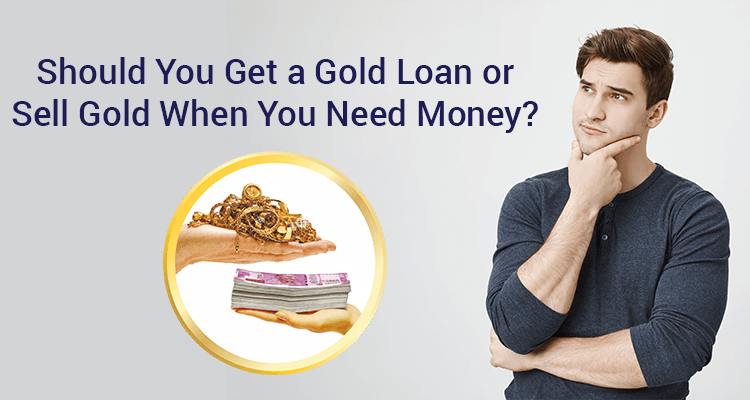
However, you can also rely on your gold assets when you face an acute financial crisis requiring immediate cash. In such circumstances, you must decide between selling your gold and taking out a gold loan. Let's explore the dilemma further in this blog.What Is A Gold Loan?
Gold loans are secured loans offered by banks and NBFCs, where gold owners pledge the precious metal in exchange for a certain amount. You must repay the loan with interest until the end of the specified tenure.Why Should You Choose A Gold Loan?
Rather than selling gold online or offline, a jewellery loan will not require you to surrender ownership. You can release the gold articles from the lender's custody as soon as you pay your loan in full.You can, however, utilize its equity, like selling gold, to acquire substantial funds and meet your other monetary obligations. Doing so will take care of your financial responsibilities while preserving some of your most valuable assets.
A gold loan has another benefit that may make it more appealing to you than selling gold.You pay the making charge for gold jewellery when you purchase it. If you sell gold, you receive only the amount you paid for the gold and not the making charge component incurred by the jewellery store.
A gold loan might be a good option since you retain ownership of the asset and don’t have to suffer losses for the making charges.Benefits Of A Gold Loan Over Other Financing Options
Here are some benefits of gold loan over other financing options.1. Instant Loans
Physical gold is used as collateral in gold loans. If a borrower defaults, lenders can easily sell the gold. Therefore, due to minimal risk, banks and other lending institutions process them quickly.2. Minimal Documentation
Unlike other loan types, gold loans do not require much documentation. You only need to submit KYC documents to apply for a gold loan. The list includes identity proof, address proof, and passport-sized photographs.3. Comparatively Lower Interest Rate
Compared to unsecured loans like personal loans, gold loans have a lower interest rate because they are secured loans. The interest rates range from 7-14%. In contrast, personal loans generally have interest rates of around 15%. Borrowers with good relationships with the lender get further discounts on gold loans.4. Zero Processing Fee & Foreclosure Charges
Since most NBFCs offer gold loans instantly against physical gold, processing fees are zero to non-existent. Most lenders also waive pre-payment penalties. Removing processing and foreclosure fees further minimises your expenditures and total payout.5. Good Credit Score Is Not Mandatory
Most lenders have easy eligibility requirements for gold loans. There is no requirement for a good credit history when applying for a gold loan. The loans are secured against the borrower's gold. Hence, lenders don't ask for credit scores because they are guaranteed repayment.6. Flexible Repayments
Another gold loan advantage is flexible repayment terms. Various repayment options are available, including EMIs, loan interest payments, and loan repayments at the end of the contract. The borrower can choose one that meets their financial goals/budget.7. Security Of Physical Gold
Once the lenders disburse the loan amount, your precious gold becomes their responsibility. Also, they store your gold in a bank's vault, which is far safer than in your home. Upon repayment of the loan, borrowers receive their gold safely.8. Minimal Foreclosure Charges
On gold loans, some banks and lenders do not levy prepayment penalties or charge a minimal amount of 1%.9. High Loan To Value (LTV) Rate
Unsecured loans rely on the borrower's credit history to determine the LTV, with a broader variable range. As gold has a relatively fixed value, Gold loans offer better LTVs.Gold is a valuable commodity, making gold loans a valuable acquisition. As a result, gold loans always have a high LTV, ensuring that the borrower receives the highest value.
Apply For A Gold Loan With IIFL Finance
When facing financial hardships, gold has proved beneficial for borrowing money. IIFL Finance offers a variety of gold loan schemes with interest rates starting at 0.83%. We have 2800+ branches across India where you can walk in, complete e-KYC within five minutes, and have your money within 30 minutes. IIFL also offers gold loans via its website or app; you'll receive cash in a few hours.Additionally, we offer a gold loan calculator to assist you in determining the amount of gold you can raise as a loan.
Frequently Asked Questions:
Q1. What is the loan-to-value ratio?
Ans: LTV or loan-to-value ratio refers to the amount a lender will loan against an asset's value. According to RBI guidelines, the LTV should be between 75-90%. However, in some cases, lenders may decide to set a lower LTV.
Q2. Does the interest rate on gold loans affect my repayments?
Ans. Yes, interest rates do affect repayment amounts. A low gold loan interest rate will also result in a lower EMI. You can also opt for a bullet repayment or an interest payout.
Q3. What factors affect the gold loan interest rate?
Ans: The interest rate on gold loans depends on several factors, including the borrower's credit score, the tenor of the loan, his income level, etc.
Frequently Asked Questions
When is it better to opt for a gold loan instead of selling gold?
Opting for a gold loan may be suitable when you need temporary funds but wish to retain ownership of your gold. Selling gold provides immediate funds but transfers ownership permanently. The right choice depends on your financial situation, urgency, and long-term asset preferences.
How does pledging gold as collateral affect ownership of the gold?
Pledging gold as collateral does not transfer ownership to the lender. The gold remains in the borrower’s name and is stored securely during the loan tenure. Ownership continues with the borrower, subject to repayment as per the loan agreement.
Will selling my gold jewellery give me the full market value?
When selling gold jewellery, the amount received may differ from the original purchase price. Buyers typically assess the gold based on purity and weight and may deduct making charges or other costs. The final payout depends on prevailing gold prices and the buyer’s valuation process.
How do current gold market prices impact the decision to sell gold?
Current gold prices directly affect both the selling value of gold and the eligible loan amount under a gold loan. Higher prices may increase sale proceeds or loan eligibility. The decision to sell or pledge gold depends on your financial needs, market conditions, and long-term asset plans.
Are there tax implications when I sell gold compared with taking a loan?
Selling gold may attract capital gains tax depending on the holding period and applicable tax laws. In contrast, taking a gold loan does not involve transferring ownership of the asset, so capital gains tax does not apply at the time of borrowing. Borrowers should consult a tax advisor for guidance based on their individual circumstances.
Disclaimer : The information in this blog is for general purposes only and may change without notice. It does not constitute legal, tax, or financial advice. Readers should seek professional guidance and make decisions at their own discretion. IIFL Finance is not liable for any reliance on this content. Read more