Gold Loan Disbursement Process: How It Works and What Borrowers Should Expect
Table of Contents
In India, gold loans are a commonly used borrowing option when individuals require funds. Instead of selling jewellery, borrowers can pledge their gold as collateral to access a loan amount based on its value. Once the loan is repaid according to the agreed terms, the pledged gold jewellery is returned to the borrower.
Most people know the basics: hand over your gold, get a loan. But what actually happens after you’ve filled out the application and handed over your jewellery? The next stage, known as gold loan disbursement, is when the lender approves the loan and releases the sanctioned amount to the borrower.
Understanding the process helps borrowers keep the required documentation ready and reduce potential delays during loan approval and disbursement. It also provides clarity on how lenders determine the eligible loan amount, the available disbursement methods, and the factors that may influence the overall timeline.
Gold loans usually get approved more quickly than unsecured loans. The gold is right there, easy for the lender to check and value. Once your jewellery is verified and you agree to the terms, the lender gets right to the disbursement stage.
So if you’re dealing with something urgent, hospital bills, business needs, school fees, or just an unexpected expense, it really pays to understand how gold loan disbursement works. It can help you understand how and when funds may be released after the loan is approved.
What is Gold Loan Disbursement?
Here’s a smoother, slightly promotional but still compliant version (no explicit regulatory mention, but tone aligned with responsible lending practices):
Gold loan disbursement refers to the stage where the lender releases the sanctioned loan amount to the borrower after completing the necessary evaluation and verification steps. It marks the final stage of the approval process, when the borrower gains access to the approved funds.
The process typically begins after the pledged gold jewellery has been assessed to determine its purity, weight, and overall value. These factors help the lender determine the eligible loan amount that may be offered against the pledged gold.
Once the evaluation is completed, the lender calculates the loan amount based on the prevailing gold price and the applicable loan-to-value ratio. Borrowers are then informed about the loan amount, interest rate, repayment tenure, and other applicable terms and charges. After the borrower reviews and accepts these conditions, the lender proceeds with the gold loan disbursement.
Because gold loans are secured against a tangible asset, the approval and disbursement process is often more streamlined compared to several unsecured borrowing options. This allows lenders to process applications efficiently once the evaluation and documentation requirements are completed.
The funds received through gold loan disbursement can be used for a range of financial needs, including medical expenses, education costs, business requirements, or other short-term financial commitments.
Understanding how the gold loan disbursement process works helps borrowers prepare their documentation in advance, gain clarity on loan terms, and navigate the process smoothly from application to fund release.
Understanding the Gold Loan Disbursement Process
The gold loan disbursement process follows a structured workflow designed to ensure that the loan is approved responsibly while still allowing borrowers to access funds quickly. Because the loan is secured against gold jewellery, the process is relatively streamlined compared to certain other secured borrowing processes, as the loan is backed by pledged gold jewellery that can be evaluated during the application stage.
From the initial application to receiving the loan amount, each step of the gold loan disbursement journey is designed to confirm the value of the pledged asset, determine the borrower’s eligibility, and ensure that the loan terms are clearly understood.
Once the borrower submits the application and presents the gold ornaments for evaluation, the lender verifies the gold’s purity and weight. Based on this assessment and the prevailing gold price, the lender determines the eligible loan amount.
After the borrower accepts the loan terms, the lender proceeds with the gold loan disbursement, transferring the approved amount through the selected payment method.
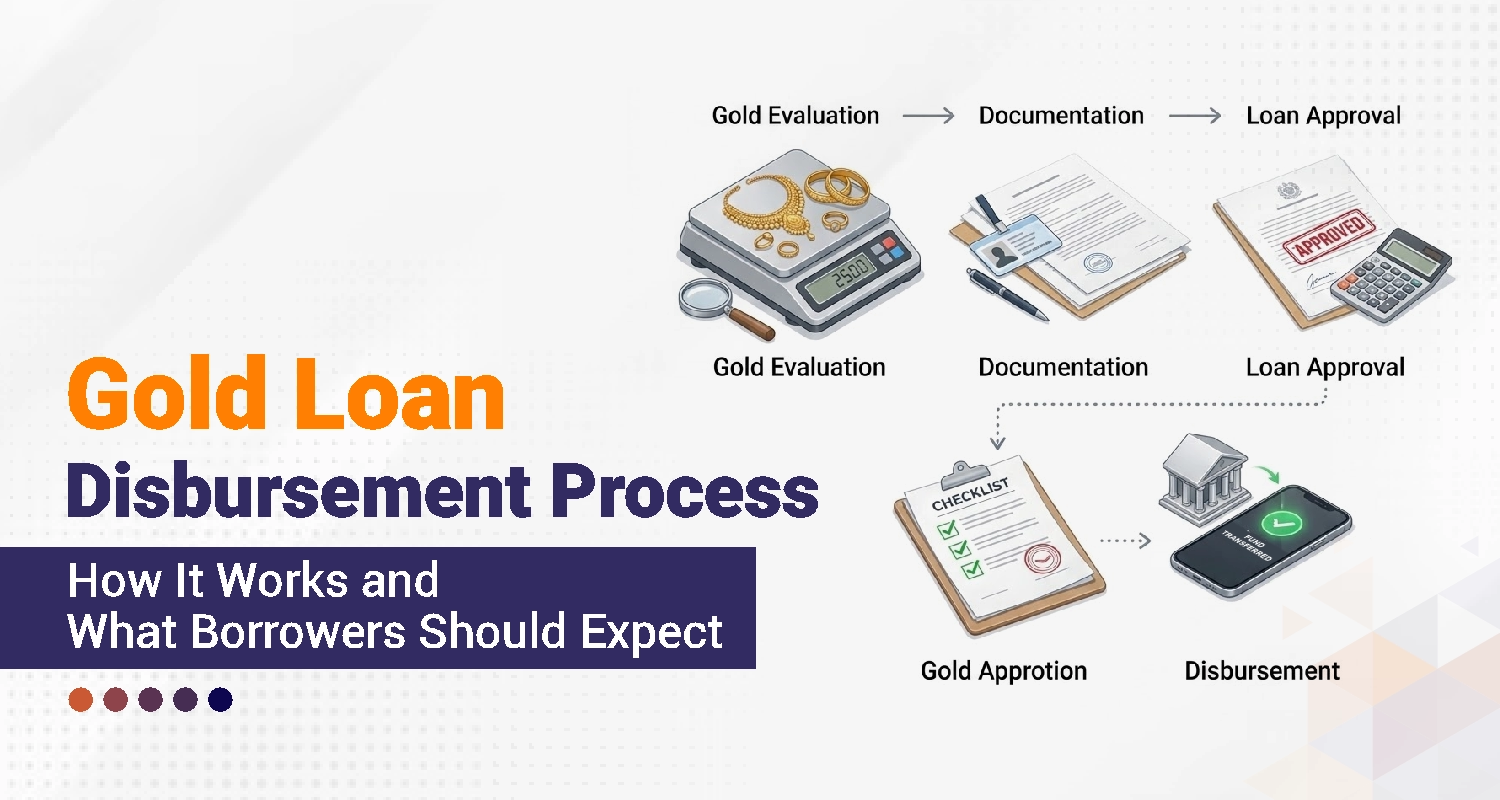
Step-by-Step Gold Loan Disbursement Process
- Gold Loan Application
The process begins when the borrower applies for a gold loan by submitting basic identification and address verification documents. The borrower also presents the gold jewellery that will be pledged as collateral.
- Gold Evaluation
The lender examines the pledged gold ornaments to determine their purity and weight. Specialised appraisal techniques are used to ensure accurate valuation while preserving the jewellery’s condition.
- Loan Eligibility Assessment
Based on the gold valuation and applicable lending guidelines, the lender calculates the eligible loan amount. This amount is typically determined as a percentage of the gold’s market value.
- Loan Approval
Once the borrower reviews and agrees to the interest rate, repayment tenure, and loan conditions, the lender finalises the loan approval and prepares for the next stage.
- Gold Loan Disbursement
The approved funds are directly disbursed to the borrowers’ bank account. At this stage, the borrower gains access to the loan amount, while the pledged gold jewellery is stored by the lender according to its storage and security procedures.
Modes of Gold Loan Disbursement
Borrowers can receive their loan amount through multiple channels depending on the lender’s policies, the sanctioned loan amount, and the borrower’s preference. The chosen method of gold loan disbursement may also depend on applicable financial regulations and the operational procedures followed by the lender.
Many lenders offer digital banking channels for loan disbursement as part of their standard processes. However, other methods of gold loan disbursement may also be available depending on the lender’s policies and the specific circumstances of the loan.
For instance, borrowers who prefer direct banking transactions may opt for bank transfers, while others may choose cheque payments. In certain situations, smaller loan amounts may also be disbursed in cash within applicable limits.
Understanding these options can help borrowers choose a gold loan disbursement method that best aligns with their preferences and the lender’s available facilities.
Gold Loan Disbursement Methods
|
Disbursement Mode |
Description |
|
Bank Transfer (NEFT / RTGS / IMPS) |
The sanctioned loan amount is electronically credited to the borrower’s bank account. This is one of the most commonly used disbursement methods. |
|
Account Credit |
If the borrower already holds an account with the lender or he/she is an existing borrower, the loan amount may be directly credited to that bank account. |
|
Cheque Payment |
The lender issues a cheque in the borrower’s name for the sanctioned loan amount, which can then be deposited into a bank account. |
|
Digital / Quick Transfer |
Some lenders may use digital payment infrastructure or instant bank transfer systems to release funds directly to the borrower’s bank account. |
Each of these options is designed to ensure that borrowers can access their funds conveniently while maintaining transparency in the gold loan disbursement process.
How long does gold loan disbursement take after approval?
One of the reasons many borrowers prefer a gold loan is the relatively quick processing time compared to several other secured lending options. Because the loan is backed by a physical asset that can be evaluated immediately, the gold loan disbursement process may be completed within a relatively shorter timeframe once all verification steps are completed.
In most cases, the timeline for gold loan disbursement begins once the pledged gold has been evaluated and the borrower has accepted the loan terms. After this stage, the lender proceeds with the release of funds through the chosen disbursement method.
While the exact duration may vary across lenders and individual cases, the entire gold loan disbursement process is typically completed within a short time frame once all verifications are complete.
Several factors influence how quickly the disbursement takes place.
Factors Affecting Gold Loan Disbursement Time
Accuracy of KYC Documents
Borrowers must provide valid identity and address verification documents. Any discrepancies or incomplete documentation can delay the gold loan disbursement.
Gold Purity and Valuation Process
The evaluation of the pledged jewellery plays an important role in determining the eligible loan amount. The time required for accurate appraisal may affect the overall gold loan disbursement process.
Loan Amount Requested
Larger loan amounts may require additional verification or internal approval procedures before the gold loan disbursement is completed.
Internal Verification by the Lender
Lenders typically perform internal checks to confirm compliance and verify the loan details before initiating the disbursement.
Borrower’s Bank Account Verification
If the loan is being transferred through a bank account, the account details must be verified to ensure the funds are credited correctly.
In many cases, existing customers may experience quicker gold loan disbursement because their identification and banking details are already recorded with the lender.
What Borrowers Should Expect After Gold Loan Disbursement
Once the gold loan disbursement is completed and the loan amount has been credited or issued to the borrower, the borrowing relationship formally begins. At this stage, borrowers should clearly understand their repayment responsibilities, loan tenure, and other contractual terms.
Being aware of these details helps borrowers manage the loan responsibly and ensures a smooth borrowing experience throughout the gold loan disbursement process and beyond.
Several important aspects come into effect immediately after the loan is disbursed.
Repayment Schedule Begins
Once the gold loan disbursement takes place, the repayment timeline becomes active. Borrowers must follow the agreed repayment schedule based on the selected tenure and interest structure.
Interest Calculation Starts
Interest on the loan amount begins from the date of gold loan disbursement. Understanding the interest structure helps borrowers plan timely repayments and manage financial obligations effectively.
Loan Agreement Details Are Provided
Borrowers receive documentation outlining the loan amount, interest rate, repayment tenure, and other conditions. Reviewing these details ensures transparency in the gold loan disbursement process.
Secure Storage of Pledged Gold
Post gold loan disbursement, the pledged jewellery is stored by the lender for the duration of the loan. Lenders generally maintain dedicated storage arrangements and security procedures for pledged assets during the loan tenure until the loan is repaid and the jewellery is released to the borrower.
Option for Early Repayment
Borrowers generally have the flexibility to repay the loan earlier than the scheduled tenure if they wish to close the loan sooner. Early repayment allows borrowers to reclaim their pledged gold once all outstanding dues are settled.
Loan Renewal Options
If borrowers require additional time to repay the loan, some lenders may allow renewal or extension options, depending on the loan terms and prevailing policies.
By understanding what happens after the gold loan disbursement, borrowers can manage their repayment schedule efficiently and avoid unnecessary penalties or complications.
Conclusion
The gold loan disbursement process plays an important role in helping borrowers access funds against the value of their gold jewellery. Once the pledged gold is evaluated and the borrower accepts the loan terms, the lender proceeds with releasing the sanctioned amount through the available disbursement methods, such as bank transfer or cheque. Because the loan is backed by a physical asset, the evaluation and approval process can often be completed efficiently once the required documentation and verification steps are fulfilled.
Borrowers should expect clear communication regarding the loan amount, interest rate, repayment tenure, and applicable charges before the disbursement takes place. Understanding these details helps borrowers make informed decisions and manage their repayment obligations responsibly.
By keeping the required documents ready and reviewing the loan terms carefully, borrowers can navigate the gold loan disbursement process smoothly. With proper awareness of the process and repayment conditions, gold loans can serve as a practical borrowing option for individuals seeking timely financial support while retaining ownership of their gold jewellery.
Frequently Asked Questions
How long does gold loan disbursement take after approval?
The timeline for gold loan disbursement usually depends on the lender’s internal procedures and the verification of documents. Once the pledged gold is evaluated and the borrower accepts the loan terms, the funds are generally released within a short time through the selected disbursement method.
What documents are required for gold loan disbursement?
Most lenders require basic KYC documents for the gold loan disbursement process, such as identity proof, address proof, and PAN details where applicable. Borrowers must also present the gold jewellery that will be pledged as collateral.
Can I receive gold loan disbursement in cash?
Cash may be available as a gold loan disbursement option for smaller loan amounts within permitted financial regulations. For larger amounts, lenders generally prefer bank transfers or cheque payments for transparency and record-keeping.
Does gold purity affect the gold loan disbursement amount?
Yes, the purity and weight of the pledged jewellery directly influence the loan amount sanctioned. During the gold loan disbursement process, lenders evaluate the gold to determine its value before calculating the eligible loan amount.
Can existing customers get quick gold loan disbursement?
Existing customers may experience quicker gold loan disbursement because their identity details and banking information are already recorded with the lender. This can reduce the time required for verification during the loan approval process.
Disclaimer : The information in this blog is for general purposes only and may change without notice. It does not constitute legal, tax, or financial advice. Readers should seek professional guidance and make decisions at their own discretion. IIFL Finance is not liable for any reliance on this content. Read more