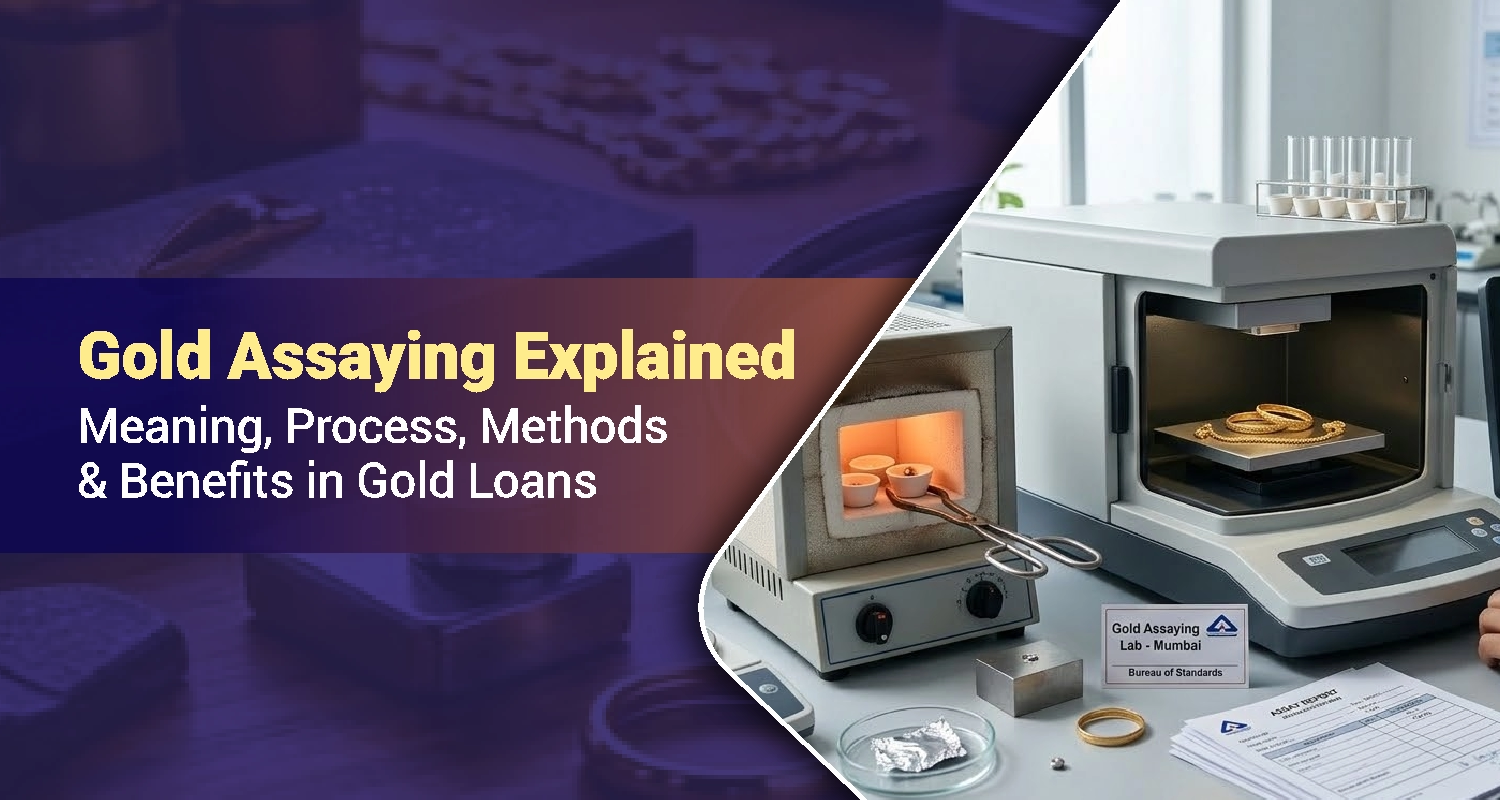
Gold Assaying Explained: Meaning, Process, Methods & Benefits in Gold Loans
Table of Contents
Gold isn’t just a part of Indian tradition - it’s also a lifeline for many families. People often use their gold jewellery as security to get quick loans when cash is tight. But before a lender hands over any money, they need to know exactly how much that gold is worth. That’s where gold assaying steps in.
Gold assaying is basically a scientific check-up for gold. It tells you how pure the gold is and what other metals are mixed in. Since the loan amount depends on the purity and weight of your jewellery, lenders rely on this process to make sure they’re valuing the gold correctly. If they skip this step, there’s a risk someone gets shortchanged—or overpaid—which isn’t good for anyone.
For borrowers, gold assaying brings some peace of mind. You know the lender isn’t undervaluing your jewellery, and the loan amount actually reflects its real worth in the market. For lenders, it’s a safety net. It helps them spot fakes, gold-plated pieces, or jewellery that isn’t as pure as it looks.
This guide breaks down what gold assaying means, how it works, the most common testing methods, and why it’s so important for anyone thinking about a gold loan.
What is Gold Assaying?
Think of gold assaying as a purity test. It’s a process where experts check how much real gold is in a piece of jewellery, a coin, or a bar. Gold jewellery is rarely pure gold, other metals like copper, silver, or zinc are mixed in to make it stronger. That’s why you hear terms like “22-karat” or “18-karat”—24-karat is as pure as it gets. The assay tells you the exact karat value of your jewellery.
Jewellers, bullion traders, and banks all use gold assaying. If you apply for a gold loan, the lender typically evaluates the purity and weight of the jewellery using standard testing methods before determining the loan amount.
The amount you can borrow depends on the weight and purity of your gold, plus the current market price. So, an accurate assay makes sure you get a fair deal and the lender knows they’re holding solid collateral.
Why Gold Assaying Matters for Gold Loans
Let’s say you’re pledging your jewellery for a loan. The bank or lender has to figure out what it’s really worth. Since the value depends on the purity and weight of the gold, assaying is a must.
If lenders skip proper testing, they might end up with fake gold or jewellery that’s not as pure as it seems. Gold assaying protects everyone in the process.
Here’s why it matters:
Checks purity with precision:
A professional assay nails down the exact karat rating, so everyone knows how much pure gold is in the piece.
Catches fakes and low-purity gold:
Testing spots gold-plated items or jewellery with less gold than claimed.
Ensures the loan amount is right:
Lenders use the assay results to decide how much to lend, so you get an amount that matches the real value.
Builds trust:
When your jewellery is tested using standard methods, you see the process is transparent and fair.
Reduces disputes:
Accurate testing means fewer arguments about value or eligibility for a loan.
With proper gold assaying, lenders can determine the gold’s purity and weight more accurately, helping them calculate the loan value based on prevailing gold prices and applicable lending guidelines.
How the Gold Assaying Process Works
When you bring in your jewellery for a gold loan, trained professionals put it through a series of tests using special tools and techniques. Banks and financial institutions have set procedures to make sure the gold is genuine and meets quality standards before they approve your loan.
Initial Inspection
The whole process kicks off with a good look at the jewellery. Assayers check for hallmark stamps, manufacturer marks, any damage, or signs of plating. Hallmarking gives you a first clue about purity, but you still need more tests to be sure.
Next up, they weigh the jewellery on precise, calibrated scales. Both the total weight and the actual gold content matter here. If jewellery contains stones or decorative elements, lenders usually calculate the net gold weight after excluding stones and other non-gold components during valuation.
Purity testing is where things get serious. The assayer checks the metal’s composition to find out its karat purity. Different places use different methods, but the goal’s always the same, figure out exactly what’s in there.
Once that’s done, they double-check the results with special instruments or standards just to make sure the purity reading is spot-on. After all the testing, it’s time to put a value on it. They calculate the loan amount based on the purity, the net gold weight, and the current gold price. This number decides the most you can borrow against your jewellery.
This step-by-step approach keeps the valuation accurate and makes sure gold loan approvals stay fair.
Common Gold Assay Methods Used by Lenders
Different gold assay methods are used across the jewellery and bullion industry to determine gold purity. For gold loans, lenders generally rely on non-destructive testing methods that allow purity verification without damaging the jewellery.
For gold loans, lenders usually go for non-destructive tests—they want to check purity without damaging your jewellery. Majorly used gold assay methods are:
Touchstone Method
The touchstone method goes way back. Here, the jewellery gets rubbed gently on a special stone called a touchstone, leaving a streak. Then acid solutions of different strengths are applied to the streak.
By watching how the gold streak reacts with the acid, trained assayers can estimate the purity. It provides an estimated purity range, which is useful for quick evaluations during gold loan assessments.
XRF (X-ray Fluorescence) Testing
X-ray Fluorescence, or XRF, is a go-to method for checking gold these days, especially in professional settings. It works like this: X-rays hit the jewellery, and the metal gives off energy signatures. These signatures show exactly what’s in the piece, so you get a breakdown of gold and any other metals, all without scratching or damaging the item.
A lot of banks and financial firms depend on XRF because it’s quick, accurate, and leaves the jewellery just as it was. You keep your piece in perfect shape, and they get the info they need.
Fire Assay Method
Now, if you want to know gold purity down to the tiniest detail, fire assay is the gold standard. It involves melting the gold sample in a lab, which separates the pure gold from everything else. The catch? It’s a destructive process. Once you’ve tested a piece this way, you can’t get it back to its original form. That’s why fire assay is mostly used for bullion or in lab analysis—not for jewellery people want to use as loan collateral.
How Gold Assaying Impacts Your Gold Loan Value
The results from gold assaying make a real difference in how much you can borrow with a gold loan. Lenders look at a few things, but gold purity is at the top of the list. Since jewellery can be all over the place in terms of karat and quality, assaying makes sure the loan value matches the real gold content. Learn the impact of the Gold Assay on Loans
Higher purity means higher eligibility
Jewellery with higher karat, such as 22K or 24K, contains more pure gold, which may increase the eligible loan value depending on the lender’s valuation and applicable lending guidelines.
Lower purity knocks down your loan limit
If the assay finds your gold isn’t as pure, the lender will offer less, because there’s less real gold in the item.
Assaying nails down the right gold price
Gold prices change all the time. Accurate testing lets lenders base your loan on the actual gold content and current rates.
It sets your borrowing cap
The combined purity and net weight of your gold help determine the maximum eligible loan amount, subject to the applicable loan-to-value (LTV) guidelines followed by lenders.
It heads off arguments down the line
When both sides see the official assay results, it cuts down on any confusion or disputes about how the loan value was calculated.
In short, proper gold testing lets lenders offer fair loan values that reflect what your jewellery is really worth—no guesswork, just solid numbers.
Benefits of Professional Gold Assaying for Borrowers
Gold assaying isn’t just about helping lenders—it’s a win for borrowers, too. When your jewellery is professionally tested, you know you’re getting a fair shake.
Benefits for gold loan borrowers
Fair, open valuation
A proper assay means you know exactly what your gold’s worth before any paperwork starts.
Loan amounts you can trust
Lenders use the real gold content—not guesses—so you get a loan figure that’s accurate.
Spotting fakes or gold-plated pieces
Professional testing catches counterfeits, so only real gold counts.
Quicker loan approval
Standard tests mean banks can check your gold quickly and move your application along.
More confidence in the process
When everything’s transparent, you can actually trust the lender and the numbers they give you.
All in all, solid gold assaying helps you get the right loan for your jewellery and makes the whole process more trustworthy from start to finish.
Conclusion
Gold continues to be a commonly used asset that households may pledge to access secured loans when they require funds. By understanding how gold assaying works and why it matters, borrowers get a clearer picture of what lenders look for and how their jewellery is valued.
Professional assaying does more than just set the right loan amount. It brings transparency and builds trust between borrowers and lenders. As long as people keep turning to gold for secured loans, reliable testing will stay at the heart of responsible lending.
Frequently Asked Questions
What does gold assaying mean?
Gold assaying is just testing gold to see how pure it is and what it’s made of. It tells you how much real gold you’ve got in your jewellery, coins, or bars.
How do lenders assay gold for gold loans?
Lenders typically evaluate gold jewellery by inspecting it visually, measuring its weight, and testing its purity using approved methods such as touchstone testing or XRF analysis before determining the loan value.
Which gold assay methods are commonly used?
Common gold testing methods include the touchstone method, X-ray fluorescence (XRF), and fire assay testing. For gold loan assessments, lenders generally use non-destructive methods such as touchstone or XRF.
Does gold purity affect the gold loan amount?
Absolutely. The purer your gold, the more money you can get for a loan. Higher purity means you have more real gold in your jewellery.
Is gold assaying safe for jewellery pledged for loans?
Yes, it’s safe. Most lenders use non-destructive tests like touchstone or XRF, so your jewellery stays just the way it was.
Disclaimer : The information in this blog is for general purposes only and may change without notice. It does not constitute legal, tax, or financial advice. Readers should seek professional guidance and make decisions at their own discretion. IIFL Finance is not liable for any reliance on this content. Read more