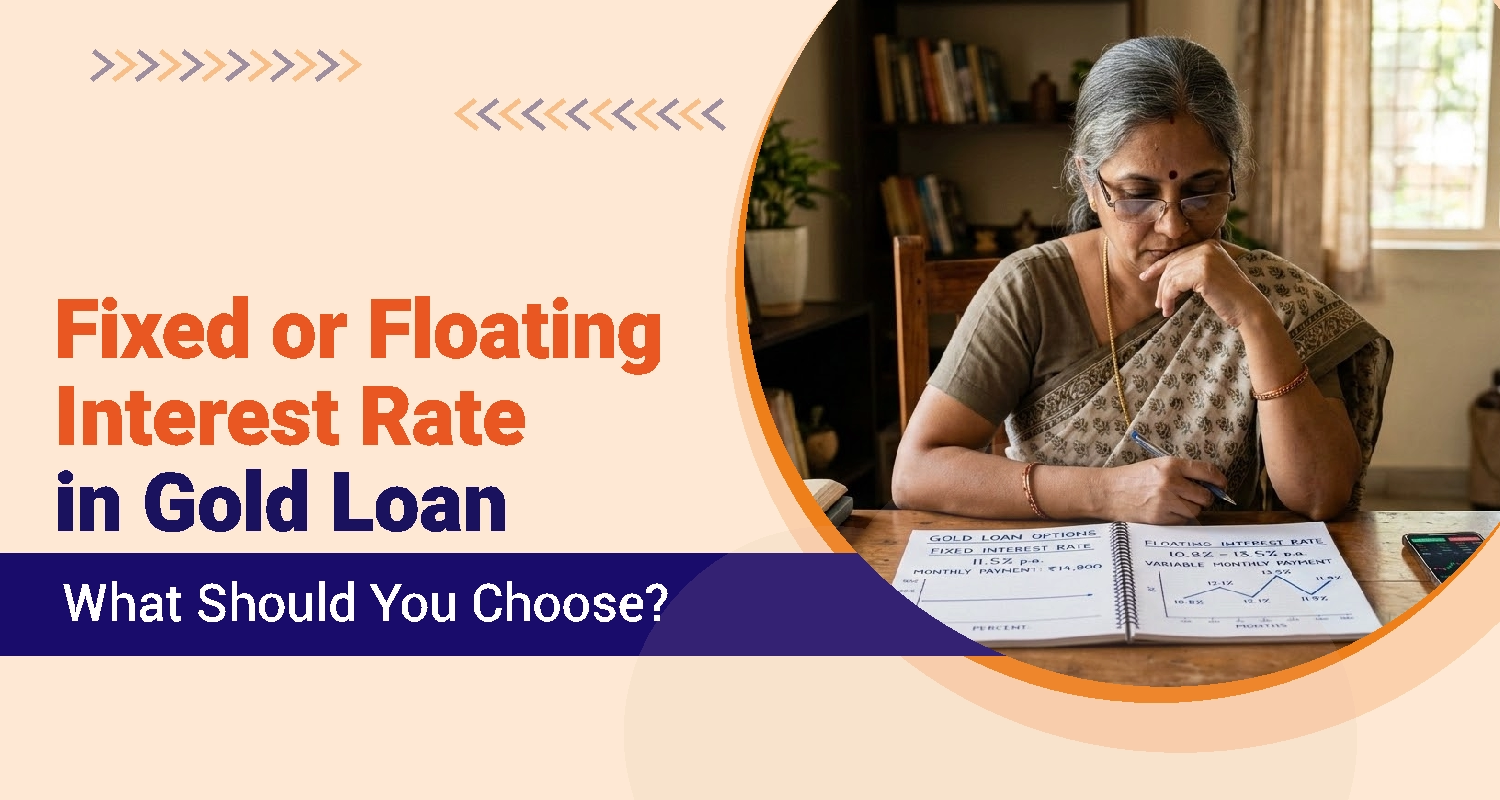
Fixed vs Floating Interest Rate in Gold Loan: Which is Better?
Table of Contents
Gold loans are often considered one of the quicker ways to access funds when needed. Borrowers can pledge gold jewellery as collateral and access funds for various personal or financial needs, e.g. unexpected medical bills, a sudden business crunch, school fees, or anything else that pops up. Because the loan is secured against gold, many lenders may offer a relatively simple application process compared to some unsecured loans.
But before you jump in, you need to figure out how interest rates work. The biggest choice is between a fixed rate and a floating rate. This decision shapes how much you’ll pay back in total, so it’s not something to take lightly.
With a fixed interest rate, what you see is what you get. The rate is locked from day one, so your EMI stays the same every month. No surprises, no guesswork. Budgeting gets a lot easier because you always know what you owe.
Floating rates are a bit different. Here, the rate can change—sometimes up, sometimes down—depending on what’s happening in the market or how your lender adjusts their policies. If rates drop, you win and pay less. If they rise, you could end up shelling out more than you planned.
So, which one should you pick? It depends on how long you’ll need the loan, your comfort with risk, and what you think will happen with interest rates. Let’s break down what each option really means for you.
Fixed Interest Rate Gold Loans: How Do They Work?
A fixed interest rate gold loan offers predictable repayment terms. Once the loan is approved, the interest rate is typically specified in the loan agreement and generally remains unchanged for the selected loan tenure, as per the lender’s terms and conditions. This means the interest payable during the tenure usually stays consistent, making it easier for borrowers to plan their repayments.
Lenders determine the fixed interest rate based on several factors, such as the loan amount, the value and purity of the pledged gold, the chosen loan scheme, and the repayment tenure. Because the rate generally remains stable throughout the loan period, borrowers can estimate their repayment obligations in advance without worrying about frequent changes in interest rates.
One of the main advantages of a fixed rate is predictability. Borrowers who prefer stable repayment amounts and want clarity about their borrowing costs may find fixed interest rate gold loans suitable for their financial planning.
Floating Interest Rate Gold Loans: What Does It Mean?
With a floating interest rate gold loan, the interest rate is not fixed for the entire loan tenure. It may increase or decrease during the loan period depending on changes in market conditions or adjustments to the lender’s benchmark or internal reference rates.
If interest rates decline after you take the loan, the interest cost may reduce, which could lower the overall interest payable. However, if interest rates increase, the borrowing cost may also rise, which could lead to higher repayments.
Floating rates may appeal to borrowers who expect interest rates to decrease or those who plan to repay the loan within a relatively short period. Since many gold loans are taken for shorter tenures, some borrowers may choose floating rates in the expectation that interest rates could move in their favour.
However, borrowers should keep in mind that floating rates involve some level of uncertainty, as repayment amounts may change if interest rates fluctuate during the loan tenure.
In comparison, fixed interest rates offer predictable repayments, while floating rates provide flexibility and the possibility of lower interest costs if rates decline. The right choice depends on a borrower’s risk tolerance, loan tenure, and financial planning needs.
Fixed vs Floating Interest Rate in Gold Loans - What’s the Real Difference?
If you’re thinking about taking a gold loan, you may need to choose between a fixed or floating interest rate, depending on the options offered by the lender. This choice matters because it can affect how predictable your repayments are, the overall borrowing cost, and the level of interest rate risk involved.
A fixed interest rate is generally associated with predictability. The interest rate usually remains unchanged during the selected loan tenure as per the lender’s terms, which can make it easier for borrowers to estimate their repayment obligations. For those who prefer stability and clear repayment planning, fixed rates can make budgeting more straightforward.
Floating interest rates work differently. They may increase or decrease during the loan tenure depending on changes in market conditions or adjustments to the lender’s benchmark or reference rates. Repayments may change during the loan period, but if interest rates decline, borrowers may benefit from lower interest costs over time.
It is important to carefully compare both options before making a decision. Understanding how each interest rate structure works can help borrowers choose a gold loan that better fits their financial needs and repayment capacity.
When Does a Fixed Interest Rate Make Sense for a Gold Loan?
Choosing between fixed and floating interest rates often depends on a borrower’s comfort with risk and expectations about interest rate movements. In many situations, a fixed interest rate may be preferred by borrowers who want predictable repayment terms. Since the interest rate generally remains unchanged during the loan tenure, borrowers can plan their finances with greater clarity.
A fixed interest rate may be suitable in situations such as:
You want predictable monthly repayments
Stable repayment amounts can make it easier to manage household finances and maintain a consistent budget.
You expect interest rates to increase
Choosing a fixed rate may help borrowers avoid higher interest costs if market interest rates rise during the loan tenure.
You are opting for a longer loan tenure
With longer repayment periods, there may be more chances for interest rate changes. Fixed rates can provide stability in such situations.
You are using the loan for important financial needs
For expenses such as education or medical needs, predictable repayment terms can help borrowers avoid unexpected financial pressure.
Many borrowers prefer fixed rates because they offer clarity about the interest rate and repayment obligations throughout the loan tenure.
When Should You Go for a Floating Interest Rate in a Gold Loan?
While fixed rates provide stability, there are situations where a floating interest rate may be considered. Floating rates may appeal to borrowers who are comfortable with some variability in interest rates and expect them to decline during the loan period.
A floating rate may be considered in situations such as:
You expect interest rates to decline
If interest rates fall after the loan is taken, the overall interest cost may reduce.
You are taking a short-term gold loan
When the loan tenure is relatively short, the impact of interest rate fluctuations may be limited.
You are comfortable with interest rate fluctuations
Borrowers whose financial situation allows them to handle small changes in repayment amounts may consider floating rates.
You want the possibility of lower borrowing costs
Floating rates may adjust based on the lender’s benchmark rates, which could reduce interest costs if rates decline.
Floating interest rates offer flexibility and the possibility of lower borrowing costs if interest rates decrease, but borrowers should also be prepared for potential increases if rates move upward.
What Should You Think About Before Deciding?
Before choosing between fixed and floating interest rates, it is important to consider your financial situation and repayment capacity. The interest rate structure you select can influence both your monthly payments and the total interest payable over the loan tenure.
Here are a few key factors to consider:
Loan tenure
For short-term loans, interest rate fluctuations may have a smaller impact. For longer tenures, many borrowers prefer fixed rates because they provide predictable repayment amounts.
Current interest rate trends
Observing market interest rate trends may help borrowers decide whether locking in a fixed rate or choosing a floating rate may be more suitable.
Loan amount and repayment capacity
For larger loan amounts, even small changes in interest rates can affect the overall interest payable. Borrowers should ensure that repayments remain manageable even if floating rates increase.
Financial stability
Borrowers with stable income may be better positioned to manage changes in repayment amounts associated with floating interest rates.
Risk tolerance
Some borrowers prefer certainty and predictable repayments, while others may be comfortable accepting some uncertainty for the possibility of lower interest costs.
If you are pledging gold jewellery to access funds through a gold loan, reviewing these factors carefully can help you select an interest rate structure that aligns with your financial plans.
Picking the Right Interest Rate for Your Gold Loan
Deciding between fixed and floating interest rates is an important part of choosing a gold loan, as it can affect both your repayment planning and the overall borrowing cost. Fixed interest rates generally provide stable repayment terms, which may be helpful for borrowers who prefer predictability in their monthly payments. Floating rates, on the other hand, may change during the loan tenure depending on market conditions or adjustments to the lender’s benchmark rates, which could lead to either higher or lower interest costs.
Before selecting an interest rate structure, it is useful to consider factors such as your loan tenure, repayment capacity, and comfort with possible interest rate changes. Evaluating these aspects can help borrowers choose an option that aligns better with their financial needs and repayment plans.
Frequently Asked Questions
What’s the difference between fixed and floating interest rates in a gold loan?
A fixed interest rate generally remains unchanged during the selected loan tenure as per the lender’s terms, which helps borrowers estimate their repayment obligations more easily. A floating interest rate, however, may increase or decrease during the loan period depending on market conditions or changes in the lender’s benchmark rates.
Which interest rate works better for a short-term gold loan?
Both options may work depending on a borrower’s financial situation. Floating interest rates may result in lower interest costs if rates decline, while fixed interest rates provide predictable repayment amounts that can make budgeting easier.
Does the type of interest rate affect whether I can get a gold loan?
The type of interest rate usually does not determine eligibility for a gold loan. Eligibility is generally based on factors such as the weight and purity of the pledged gold, the lender’s policies, and applicable loan-to-value guidelines.
Can the interest rate change during a fixed rate gold loan?
In most cases, the interest rate in a fixed rate gold loan remains unchanged during the loan tenure, according to the lender’s terms and conditions.
How can I reduce the interest cost on a gold loan?
Borrowers may reduce overall interest costs by choosing an appropriate loan tenure, making timely repayments, and selecting an interest rate structure that suits their financial situation.
Disclaimer : The information in this blog is for general purposes only and may change without notice. It does not constitute legal, tax, or financial advice. Readers should seek professional guidance and make decisions at their own discretion. IIFL Finance is not liable for any reliance on this content. Read more