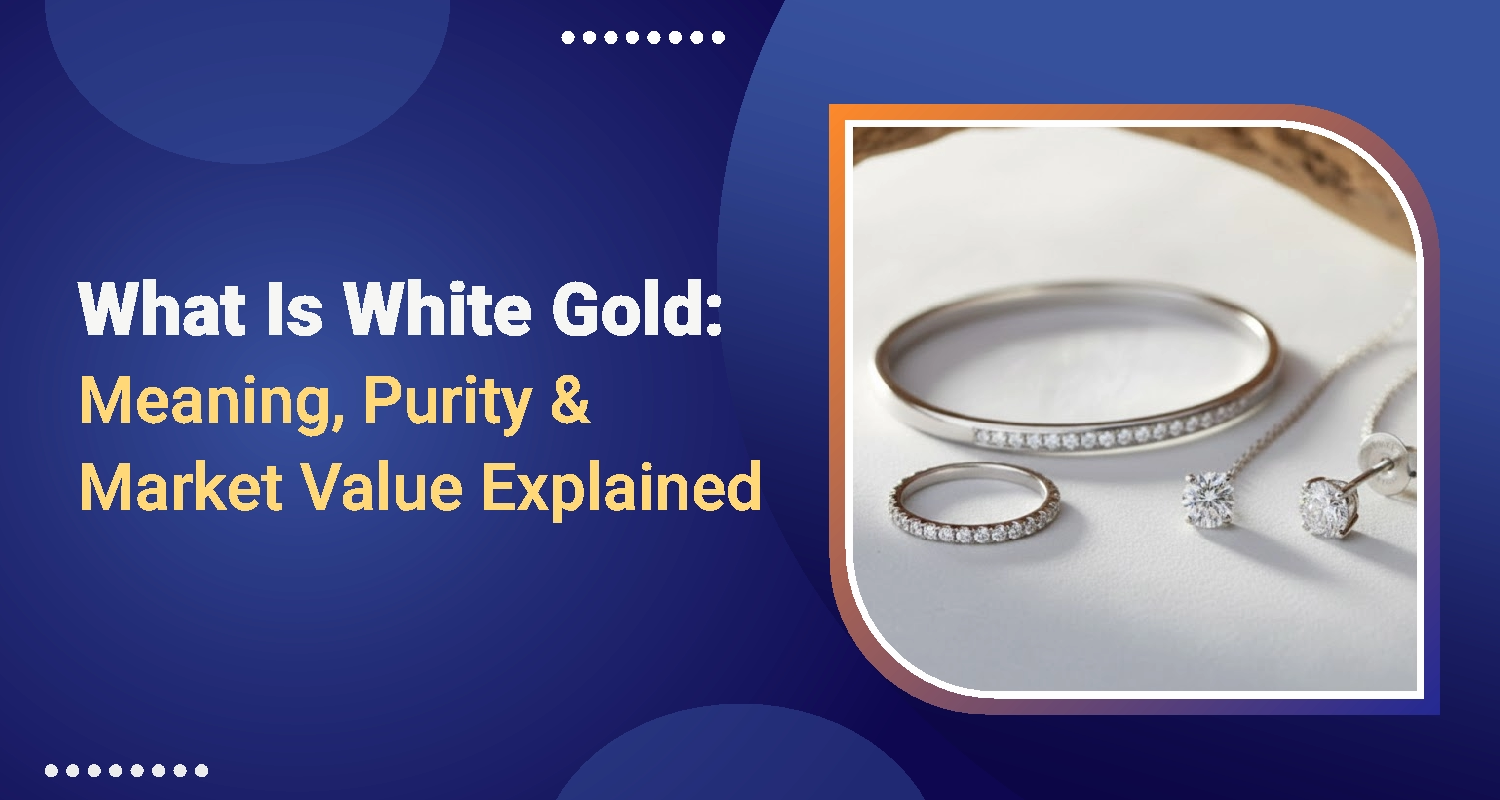
What Is White Gold: Meaning, Purity & Market Value Explained
Table of Contents
For all those wondering what is white gold, it basically is a gold alloy which combines gold with nickel and palladium and silver to create its composition. This blend gives white gold its distinctive color and strength. In other words, white gold represents a modern alloy which unites yellow gold elegance with its sleek silver appearance.
The purity and alloy composition of white gold directly influence its appearance, durability, and value, especially when used as collateral for gold loans. White gold now leads the Indian jewellery market because people choose it for their engagement rings and luxury items and valuable investments that offer both fashion appeal and enduring value.
Understanding White Gold: Meaning and Composition
White gold means a combination of yellow gold with white metals which produce a silver-like appearance and enhanced durability. The exact composition of white gold remains unclear to most people and hence the question of what is white gold.
The production of white gold involves uniting gold with nickel and palladium and silver and zinc to create a stronger metal with a lighter colour. The metal strength increases while the colour becomes lighter because of these additions.
White gold became popular during the 1920s because it provided a platinum-like appearance at a lower price point which made it suitable for jewellery production. What is white gold called? The jewellery industry refers to white gold as gold but uses different metal combinations to achieve its appearance and durability.
The combination of modern style and high value makes white gold a popular choice among young people who want fashionable and worthwhile jewellery.
White gold remains in high demand because people seek durable luxury items that match both Indian and Western design preferences. The combination of classic style with simple upkeep makes white gold an excellent investment choice and daily wear option.
What Is White Gold Made Of?
When understanding what is white gold made of, it is important to know that it is not a naturally occurring metal but a carefully crafted alloy. Pure gold is too soft to be used for everyday jewellery, so other white metals are added to strengthen it and modify its color.
The common metals used in white gold alloys include:
- Nickel: adds strength and a bright white appearance
- Palladium: increases durability and provides a hypoallergenic option
- Silver: lightens the alloy and enhances polish
- Zinc: improves smoothness and helps prevent oxidation
In India, white gold is usually available in 18k (75 percent gold) and 14k (58.5 percent gold) variants. These blends preserve gold’s premium value while offering a stronger metal ideal for regular wear.
White gold jewellery requires rhodium plating for surface protection and to achieve its shiny appearance. The thin coating provides two benefits by creating a reflective appearance and protecting the metal from scratches and loss of shine. The plating will eventually disappear but a simple re-plating process will bring back the jewellery’s original shine while maintaining its fresh appearance.
White gold’s composition also makes it ideal for intricate jewellery settings where strength and elegance must work together, especially for diamond engagement rings and fine ornaments.
The Purity of White Gold Explained: Karat and Hallmarks
White gold purity is measured using the same karat system applied to yellow and rose gold. The karat symbol "K" shows the amount of pure gold which exists in the alloy. The gold content in 24K represents 100% pure gold but 18K white gold contains 18 parts gold and 6 parts alloy metals.
The amount of gold in white gold increases when the white gold karat rating rises which produces a warmer colour and increases the value of the metal. The combination of durability and affordability makes 14K white gold more suitable for daily use compared to higher karat ratings.
The Indian jewellery industry operates under strict rules which determine how they verify product purity. The BIS certification and 18K750 markings and jeweller identification codes function as authentication symbols which help buyers confirm their purchase authenticity.
People who want to obtain gold loans need to understand white gold purity because it affects their loan process. The lenders assess both the karat rating and official hallmarks to establish the exact worth of the metal. Well-hallmarked jewellery often qualifies for higher loan amounts since purity directly affects the weight of pure gold considered during valuation.
Why White Gold Is Popular in India: Trends and Benefits
White gold sales in India continue to grow because Indian consumers have adopted this metal through their cultural preferences and their preference for modern designs. Young consumers choose white gold because it offers both fashionable design and durable construction.
Here are some key white gold advantages that explain its growing popularity:
- Elegant aesthetic that enhances the brilliance of diamonds and gemstones
- Durability that makes it suitable for daily wear and long-term use
- Hypoallergenic nature when alloyed with palladium instead of nickel
- Versatility across both men’s and women’s jewellery collections
- Platinum-like sheen offering luxury at a relatively affordable price
- Fashion relevance influenced by Western designs and celebrity trends
- Timeless charm that suits both traditional and modern outfits
For many, white gold advantages go beyond looks. Its resistance to tarnish and ability to complement various skin tones make it an appealing alternative to yellow or rose gold. The rhodium finish gives an added layer of shine and strength, ensuring jewellery retains its newness for years.
In India’s wedding and festive markets, white gold continues to symbolize sophistication and practicality. It stands as a symbol of contemporary elegance while maintaining the cultural essence of gold ownership.
As investment awareness grows, more Indians now view white gold as a smart, value-retaining asset for long-term financial security.
How to Calculate the Price of White Gold Jewellery
Understanding how to calculate white gold price is essential for anyone buying, selling, or using jewellery as collateral for a gold loan. Since white gold contains both gold and other alloy metals, its final cost depends on several combined factors.
The basic formula to determine white gold price is:
Price = (Current Gold Rate × Purity Percentage × Weight) + Making Charges + Plating Cost
For example, if the 22K gold rate is ₹6,000 per gram and you have 10 grams of 18K white gold (which is 75 percent pure):
₹6,000 × 0.75 × 10 = ₹45,000 (excluding making and rhodium plating charges).
This is only an estimate. Other aspects such as alloy metal composition, rhodium plating, and craftsmanship charges affect the total cost. Rhodium, in particular, adds shine and longevity, but also slightly increases the overall price.
Since gold rates fluctuate daily, it is advisable to check updated market prices from verified jewellers or financial portals before making any transaction. This ensures a fair and transparent valuation whether you are purchasing new white gold jewellery or pledging it for a loan.
Factors Affecting the Market Value of White Gold
White gold value depends on various elements which originate from internal and external sources. The market value and resale worth of these items depend on these factors. The value of white gold depends most on purity but other economic and design elements play a significant role in the process.
Here are some factors that determine the value of white gold:
- Global gold rates: Gold's market value of gold depends on worldwide market trends and economic performance.
- Karats & Purity: White gold's value depends on its purity level which shows the amount of actual gold in the alloy.
- Alloy Metals: Palladium and nickel alloy are two metals, the combination of which affect both product durability and production expenses.
- Rhodium Plating Cost: The cost of rhodium plating for white gold increases its brilliance but makes maintenance more expensive.
- Design: Jewellery design and craftsmanship determines aesthetic and resale appeal
- Market Demand in India: Market trends and demand within India’s evolving fashion and bridal segments
Buyers and investors should regularly monitor price fluctuations and verify the current white gold value before making any financial or jewellery purchase decisions. This awareness ensures smarter buying choices and accurate returns on investment.
How White Gold Jewellery Is Valued for Gold Loans
Financial institutions use a systematic process for white gold valuation to determine how much loan amount a borrower can receive. Since white gold contains both gold and alloy metals, lenders primarily focus on purity, weight, and current gold prices to estimate its worth.
The gold loan valuation process generally involves:
- Purity testing through hallmark verification or karat measurement using specialized devices
- Weighing the jewellery after removing non-metal components like stones or beads
- Applying the latest market rate of gold to the pure gold weight in the item
- Adjusting the value based on alloy content and rhodium plating condition
- Calculating the eligible loan amount as a percentage (commonly up to 75 percent) of the assessed gold value
Minor wear on rhodium plating or lower karat purity can reduce the overall white gold valuation, as lenders prioritize the actual gold content. Keeping jewellery hallmarked and in good condition ensures you get a higher and more accurate loan offer.
Financial institutions like IIFL Finance also offer the facility of online gold loan calculator, allowing borrowers to easily estimate their loan eligibility and repayment terms based on purity, weight, and the latest market gold rates.
How to Check the Loan Value of Your White Gold Jewellery
If you are planning to pledge your jewellery, it is easy to check white gold loan value at home before visiting a lender. A basic calculation gives you an approximate estimate of how much loan amount you may receive.
Follow these steps to calculate loan on white gold:
- Weigh your jewellery accurately using a digital scale to get the total weight in grams.
- Verify the purity through hallmark stamps or get it tested by a professional jeweller.
- Check live gold rates for the day on reliable financial websites or mobile apps.
- Apply the loan formula:
- Loan Value = (Gold Rate × Purity × Weight × Loan-to-Value Ratio).
- Compare offers from various banks or NBFCs to find competitive interest rates.
- Use online calculators available on financial platforms to estimate your potential loan amount quickly.
Recommended Tools & Resources:
- IIFL Finance Gold Loan Calculator: For accurate loan estimation and eligibility checks.
- BIS Care App: To verify hallmark authenticity and purity of jewellery.
- MCX India or in: For checking daily live gold rates.
- Digital Jewellery Scales: Available online (Amazon, Flipkart) for accurate home weighing.
Frequently Asked Questions
Is white gold accepted as collateral for a gold loan?
Yes, most financial institutions in India accept white gold jewellery as collateral, provided it meets standard purity and hallmark requirements. Proper testing and certification help ensure accurate valuation and loan approval.
How is the purity of white gold measured for gold loans?
White gold purity can be measured through karat meters or by checking BIS hallmarks that appear on the jewellery. The exact gold content in the alloy becomes measurable through these methods which enable lenders to determine its exact value.
Does white gold have the same market value as yellow gold in loans?
If both have the same karat purity, their market valuation is nearly identical. However, factors like rhodium plating, alloy type, and craftsmanship may slightly influence the loan value of white gold items.
Can I insure my white gold jewellery separately?
White gold jewellery owners can purchase insurance protection through particular jewellery insurance policies.
Why do banks or NBFCs check the purity of white gold before approving a loan?
Banks and NBFCs verify purity during white gold valuation to ensure the pledged jewellery has genuine gold content. The testing process needs to be accurate because it enables fair loan distribution and stops lenders from underestimating property values. The testing process enables lenders to establish exact loan-to-value ratios while following regulations and preventing disputes about loan values during the processing stage.
Disclaimer : The information in this blog is for general purposes only and may change without notice. It does not constitute legal, tax, or financial advice. Readers should seek professional guidance and make decisions at their own discretion. IIFL Finance is not liable for any reliance on this content. Read more