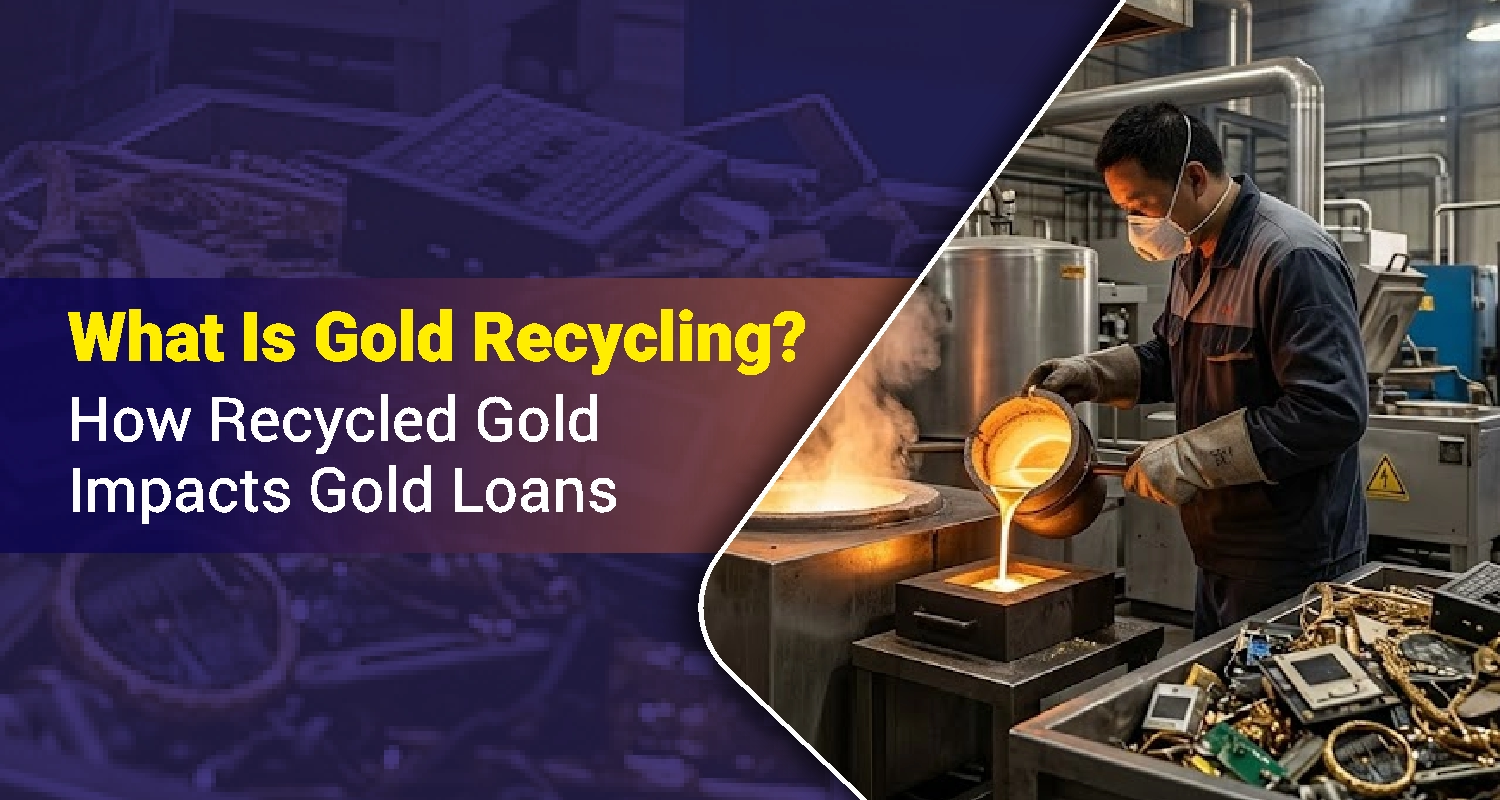
What Is Gold Recycling? How Recycled Gold Impacts Gold Loans
Table of Contents
Since gold is a limited resource and its demand is rising globally, the idea of a circular economy has become essential. Since it enables the sustainable reuse of this valuable metal without the environmental costs associated with new mining, gold recycling has grown significantly in importance in India. Recycled gold is essential to preserving liquidity in the gold loan environment. The gold recycling procedure guarantees that the purity of the metal is restored and confirmed, regardless of whether it is a damaged ornament or an ancient family treasure. Borrowers who want to use such assets for a loan must comprehend how this procedure operates.
What is Gold Recycling?
The technique of recycling previously used gold to its pure state for future use is the fundamental component of gold recycling. However, what is recycled gold in a real-world context? It describes any gold object that has been melted down and cleaned, including worn-out jewellery, coins, and even broken medals.
Gold recycling in India is a deeply ingrained cultural tradition, where families often exchange outdated designs for more modern ones. Recycled gold retains its intrinsic value regardless of its previous form, which makes it valuable to financial institutions. The metal continues to be a reliable asset for securing a loan, ensuring that you can receive up to 75% of the Loan-to-Value (LTV), provided it meets the required purity and quality standards during evaluation.
Types of Gold Used in Gold Recycling
To understand the value of your assets, you first need to ask: What is recycled gold? It is gold that has been extracted from old jewellery, refined, and redesigned into new ornaments, making it a sustainable and cost-effective alternative to newly mined metal.
Gold recycling involves several categories of gold, some of which may be used as collateral for secured funding, subject to lender policies, such as:
Jewellery Gold: The most commonly accepted form. However, it often contains non-gold elements like lac, stones, or enamel, which are deducted during the net weight calculation.
Industrial Gold: Sourced from decommissioned electronics, plating, or dental alloys. This type is typically refined before reuse and is generally not accepted directly as collateral by most lenders.
Scrap Gold: This includes gold from broken ornaments, mismatched earrings, or manufacturing leftovers that no longer serve their original purpose. If in jewellery form, it may still be eligible for pledge based on purity and lender guidelines.
Alloy-based Gold: Gold is often mixed with metals like copper, silver, or zinc to provide strength to intricately designed pieces. The purity level (karatage) determines its eligible value during assessment.
In a gold loan evaluation, the ultimate value is influenced primarily by purity and net gold weight rather than the previous form of the gold. For example, scrap jewellery may require more thorough purity testing compared to standard ornaments. Borrowers should understand the type and purity of gold they own. Even if an item was previously considered “scrap,” it can still be used as collateral, provided it meets the lender’s purity requirements, since valuation is based on its net gold content.
Understanding Gold Alloys in Recycled Gold
Because 24K gold is so soft, it is frequently combined with other metals like copper, silver, or zinc to make long-lasting jewellery. These combinations are referred to as gold alloys. Since these alloys have a direct impact on the quality of the recovered gold, knowledge of them is crucial during the gold recycling process.
A lender conducts stringent purity testing while assessing a loan application containing recycled gold. Your loan eligibility is determined by the ultimate Karatage, which is determined by the alloy composition. The borrower will benefit from a better loan-to-value (LTV) ratio if the recycling process has been effective in separating the pure gold from the base metals. By accurately identifying these alloys, the lender may establish a credit limit that accurately represents the value of the precious metal and guarantee that the gold quality assurance criteria are fulfilled.
Gold Recycling Process in India - Step-by-Step
Gold recycling in India is a methodical procedure that guarantees the metal is suitable for commercial usage. Here's how to comprehend the journey from antiquated decoration to sophisticated asset:
- Gathering and Sorting: Antique gold objects are collected and arranged according to their seeming purity.
- Melting: The materials are heated to extremely high temperatures to turn them into a
- Refining and alloy separation: This involves chemically separating pure gold from other impurities and metal alloys, which is an essential part of the gold recycling process. This is done to get the gold back to a high fineness (usually 22K or 24K).
- Purity Testing: To ensure the purity of the refined gold, it is tested using fire assay techniques or XRF devices.
This procedure is important for a gold loan as refined gold is now a common and legitimate type of collateral.
How Recycled Gold Affects Gold Loan Value
Utilising recycled gold can influence how your loan application is evaluated. Since refined gold may have clearer purity standards, lenders can sometimes determine the metal’s net weight and purity with greater transparency during assessment.
Using recycled gold for a loan offers the following advantages:
Sustainable Value: Recycling does not change the chemical composition or intrinsic value of gold. Its value remains intact while reducing environmental impact.
Precise Purity Testing: Refined gold may allow for more consistent purity assessment due to standardised processing.
Fair Eligibility: Higher purity levels can help borrowers secure a higher eligible loan amount, subject to Loan-to-Value (LTV) norms.
Quick and Simple Disbursals: Clear purity markings and standardised jewellery may streamline the verification process.
No Hidden Costs*: Transparent valuation based on net gold weight ensures clarity during assessment.
Gold Pledged is Secured: Once evaluated, the pledged gold is stored in high-security vaults until the loan is repaid.
Before applying for a gold loan, recycling damaged or outdated jewellery through a reputable refiner in India can be beneficial if it improves purity or removes non-gold elements. However, most lenders assess jewellery in its existing form, provided it meets the required purity standards.
Refining gold may improve clarity in valuation if impurities are removed, but the loan amount ultimately depends on net gold weight, purity, prevailing gold rates, and applicable Loan-to-Value (LTV) limits. Proper documentation and transparent evaluation help ensure smooth loan approval and secure release of gold once repayment obligations are fulfilled.
Frequently Asked Questions
What is recycled gold, and is it accepted for gold loans?
It is gold that has been purified from old or broken objects after being melted down. It is accepted in full for gold loans. It is valued by lenders according to its weight and net purity, guaranteeing you a fair bargain.
Does gold recycling affect the purity of gold used for gold loans?
In fact, the process of recycling gold aids in purity restoration and verification. The metal is brought back to a standard Karatage (such as 22K) by eliminating non-gold alloys and impurities, which is necessary to ascertain your loan eligibility.
How does the gold recycling process impact gold loan valuation?
A comprehensive gold recycling procedure improves the accuracy of appraisal. The appraiser can accurately calculate the net weight since the gold has been purified and the stones have been removed. This openness guarantees that there are no hidden fees and promotes quick and simple payouts.
Is recycled gold treated differently from new gold in gold loans?
The treatment of recycled gold is identical to that of fresh gold. The metal's weight and purity are more important to lenders than its age or past. Your pledged gold is kept safe, and you get the same expert treatment as long as it satisfies the requirements.
Can alloy content in recycled gold reduce gold loan eligibility?
The purity will be lower, and the loan amount may be lowered if a high alloy content is still present. Professional gold recycling in India, on the other hand, guarantees maximum purity and helps you obtain a better loan with less paperwork.
Disclaimer : The information in this blog is for general purposes only and may change without notice. It does not constitute legal, tax, or financial advice. Readers should seek professional guidance and make decisions at their own discretion. IIFL Finance is not liable for any reliance on this content. Read more