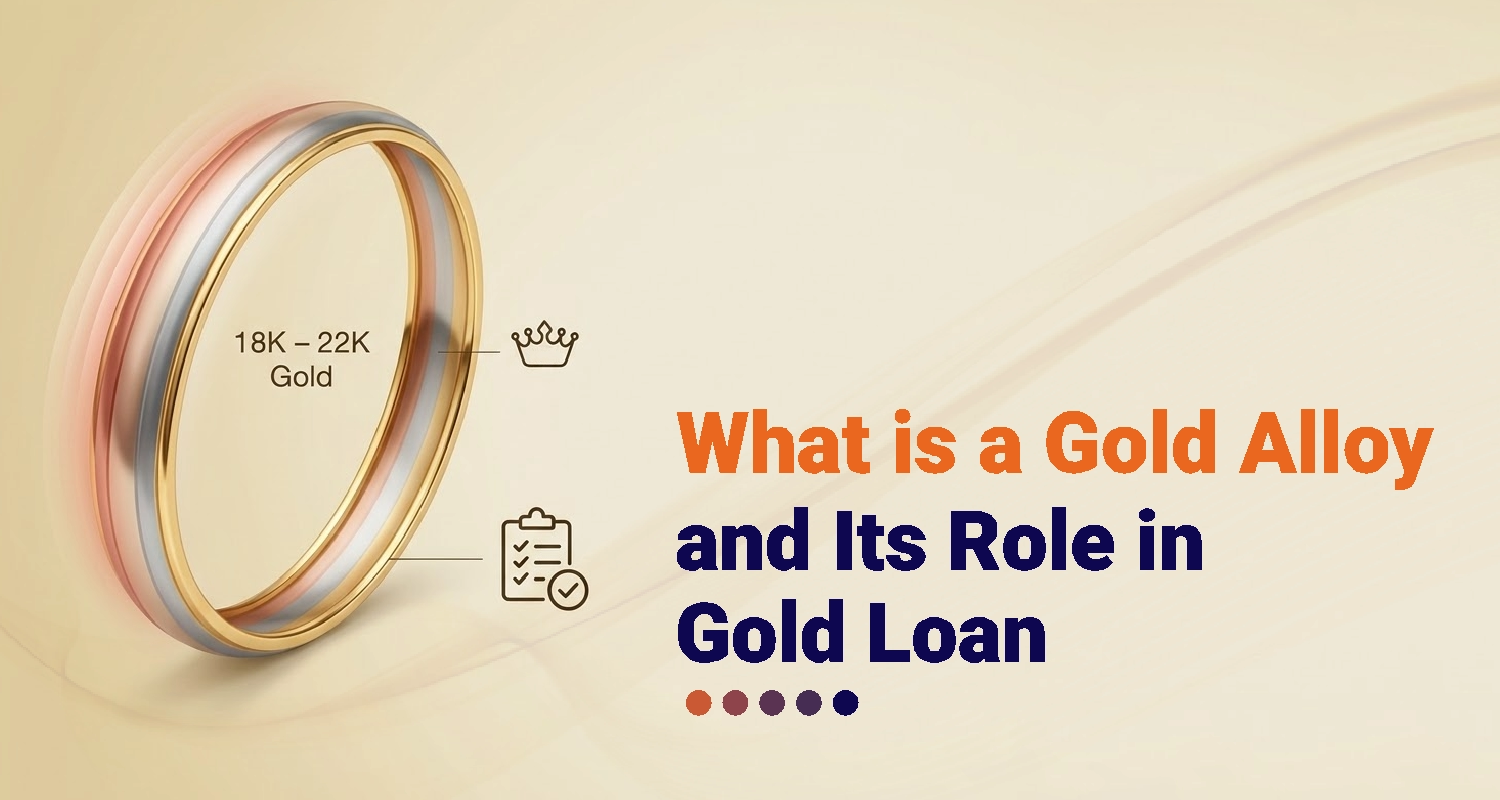
What is a Gold Alloy and Its Role in Gold Loan
Table of Contents
Gold loans have gained popularity in India due to the surging market prices. The most important factor considered here is the purity of the metal. Pure gold that is 24K is beautiful but too soft for sturdy ornament designs, so it’s usually blended with metal alloys like silver or copper to increase its durability. This blended gold is known as a gold alloy that can be 22K, 21K, 18K, or even less. The purity of the gold is an important deciding factor evaluated to find any loan amount. As simple as it gets, higher purity gets a better valuation, higher eligibility, and maybe even lower interest rates. This blog talks about how gold alloy compositions have an effect on your gold loan.
What is a Gold Alloy?
Pure gold, popularly known as 24 karat, is very soft in nature and can bend or scratch easily, making it impossible to be used in dailywear jewellery. In order for it to be used in ornaments, it needs to be mixed with other metals like silver, zinc, copper, or a mix. This, known as a gold alloy, is a durable form without compromising on the beautiful shine.
In addition to strength, the alloy made up of a mix of metals also impacts the colour and the market price of the piece. When you apply for a gold loan, lenders check the purity of the gold alloy through hallmarking so that the actual gold percentage is determined. This ensures perfect valuation for your loan eligibility and leaves no room for last-minute surprises.
Why Gold is Mixed with Other Metals: Understanding Gold Alloy Composition
Gold alloys are created perfectly that maintains balance between the metal’s financial value, its aesthetic appeal, and its durability as daily wear. All these factors also change as per the specific metal used in the alloy composition.
Common metals in gold alloys include:
- Copper: It is mostly used for adding strength and it gives a reddish rose hue
- Silver: Preserves the golden shine and is used in white gold variants
- Zinc: Improves castability and corrosion resistance, often in lower-karat mixes
24 carat gold alloy has minimal additions and is nearly pure so highly preferred for gold loans. Gold loans accept specific compositions, typically 18-22 karats, as verified by BIS hallmarks. Excessive non-gold content in lower alloys reduces purity, lowering loan value and eligibility, lenders deduct for impurities to mitigate risk.
Types of Gold Alloys and Their Purity Levels
Gold alloys are categorised by karat value, reflecting gold purity percentage; higher karats mean less alloying and greater value in gold loans. Lenders prefer 22+ karats for optimal eligibility, using XRF machines or acid tests for verification. Below are the major types of gold alloys:
- 24 Carat Gold Alloy (Purest Form, Minimal Alloying)
24 carat gold alloy is 99.9% pure gold with trace alloys for minimal hardening. It is rarely used for jewellery and is ideal for coins or bars. Gold loans offer top Loan-to-Value (LTV) ratios up to 75%.
- 22 Carat Gold Alloy (Commonly Accepted for Gold Loans)
At 91.6% purity and known as 916 gold, 22 carat gold alloy mixes ~8% copper or silver. Popular in Indian wedding jewellery, its BIS hallmark makes it widely accepted by lenders with strong valuation.
- 18 & 14 Karat Gold Alloy (Lower Purity, Limited Loan Value)
18 karat (75% gold) uses more alloys for durability in fashion pieces. 14 karat gold alloy (58.3% gold) is common in everyday Western jewellery but fetches lower loans due to high alloy content, often capped at 50-60% LTV.
Comparison of Gold Alloys by Karat and Loan Eligibility
Understanding the karat of gold is important for determining loan eligibility. Different gold alloys, such as 18K, 22K, etc., affect the purity and thus the valuation of gold when availing a gold loan. This comparison helps borrowers gauge potential loan amounts while staying aligned with RBI guidelines.
|
Karat |
Gold Purity (%) |
Alloy Content (%) |
Typical Loan Eligibility (LTV) |
|
24 Karat Gold Alloy |
99.9 |
<0.1% |
High (70-75%) |
|
22 Karat Gold Alloy |
91.6 |
~8.4% |
High (65-75%) |
|
18 Karat Gold Alloy |
75 |
25% |
Medium (60-70%) |
|
14 Karat Gold Alloy |
58.3 |
~41.7% |
Low (50-60%) |
This table shows how gold alloy purity drives loan value, opt for higher karats for better terms.
What is a Gold Alloy Calculator and How Does It Help in Gold Loans?
A gold alloy calculator is an online tool that estimates pure gold content by inputting weight, karat, and market price, deducting alloy percentages for accurate valuation. It helps gold loan borrowers preview eligibility before appraisal, factoring in purity like 22 or 24 Karat.
For example, if you have 20g of 22-carat gold (91.6% purity) and the market rate is ₹14,500/g:
- Pure Gold Content: 20 g x 0.916 = 18.32 g
- Market Value of Pure Gold: 18.32 g x ₹14,500 = ₹2,65,640
- Estimated Loan (75% LTV): ~₹1,99,230
But, if that same 20 g were a 14-carat gold alloy (58.3% purity):
- Pure Gold Content: 20 g x 0.583 = 11.66 g
- Market Value of Pure Gold: 11.66 g x ₹14,500 = ₹1,69,070
- Estimated Loan (60% LTV): ~₹1,01,442
This shows how understanding the alloy composition becomes very important. You may use the calculators from lender sites for quick insights.
Role of Gold Alloy in Gold Loan Valuation and Interest Rates
Gold alloy purity plays a critical role in the gold loan process, as lenders assess the purity of pledged jewellery before determining its value. The appraisal value of different types of gold alloys is calculated based on the net weight of gold and its purity, which directly influences the eligible loan amount. As per RBI guidelines, lenders can offer up to 75% Loan-to-Value (LTV) on the assessed value of gold jewellery, subject to internal policies.
Higher purity gold generally results in a higher assessed value, which may increase the eligible loan amount. However, the final loan sanction, applicable LTV, and interest rate depend on the lender’s internal risk assessment, valuation method, and prevailing policies.
Key influences include:
- Gold Loan Appraisal & Eligibility: The loan amount is based on the net weight and purity of gold; higher purity increases the assessed value and potential eligibility, subject to lender appraisal and RBI guidelines.
- LTV & Interest Rates: Lenders may offer up to 75% LTV as per RBI norms, but actual LTV and interest rates depend on internal policies, loan scheme, and risk assessment, not just gold purity
Lenders favour high-purity alloys for resale ease, benefiting borrowers with better terms and faster approvals.
How Different Gold Alloys Affect Your Gold Loan Amount
Even if two gold alloys (ornaments) weigh exactly the same, their purity can result in different loan eligibility outcomes because valuation is based on pure gold content. Assuming a reference gold rate of ₹14,500 per gram and an LTV of up to 75% (as permitted under RBI guidelines, subject to lender policy):
- Scenario A: 10g of 24-carat gold (99.9% purity)
Estimated loan amount (75% LTV): ~₹1,08,641 - Scenario B: 10g of 22-carat gold (91.6% purity)
Estimated loan amount (75% LTV): ~₹99,615 - Scenario C: 10g of 14-carat gold (58.3% purity)
If a lender applies a lower LTV based on internal risk policy (for example, 55%), the estimated loan amount may be ~₹46,494.
These examples are purely illustrative. Actual loan eligibility depends on the lender’s appraisal process, reference gold rate, purity testing, deductions (if any), and applicable internal policies. In general, higher purity gold results in a higher assessed value, which may lead to higher loan eligibility under similar LTV conditions.
Frequently Asked Questions
What is a gold alloy and why is it important for gold loans?
A gold alloy is pure gold mixed with base metals like copper or silver to improve its durability. Understanding this is important while applying for a gold loan as the actual gold content percentage and its purity level impacts crucial factors like the LTV, valuation, and interest rate.
Which types of gold alloys are accepted for gold loans in India?
Most banks and NBFCs offer loans on gold alloys having purity of 18-24 karats, out of which 22 Karat gold is most common as it is more used in jewellery. Only few accept alloys below 18 Karats, and are subject to stricter valuation or lower eligibility.
How does a gold alloy calculator estimate gold loan value?
The calculator can help find the exact value by multiplying the total weight by its purity percentage (e.g.: 91.6% for 22Karat gold). Then, applying the current market rate to this net gold weight. The final amount is based on the LTV permitted by the lender (up to 75%).
Is 14 karat gold alloy eligible for a gold loan?
Only a few lenders offer gold loans on 14 karat gold alloy, as most of them have a minimum requirement of 18 Karats. If accepted, the borrower will get a significantly lower loan amount and higher interest rates as it contains only 58.3% of pure gold and almost 42% of non-gold base metals.
Why does 24 carat gold alloy get the highest gold loan value?
24 Karat gold alloy gets the highest gold loan value because it is 99.9% pure, containing almost no other metal ‘impurities’. For gold loans, it is viewed as a low-risk and highly liquid asset. Due to its higher rate, lenders offer the maximum possible LTV ratio, that gets the highest loan amount possible.
Disclaimer : The information in this blog is for general purposes only and may change without notice. It does not constitute legal, tax, or financial advice. Readers should seek professional guidance and make decisions at their own discretion. IIFL Finance is not liable for any reliance on this content. Read more