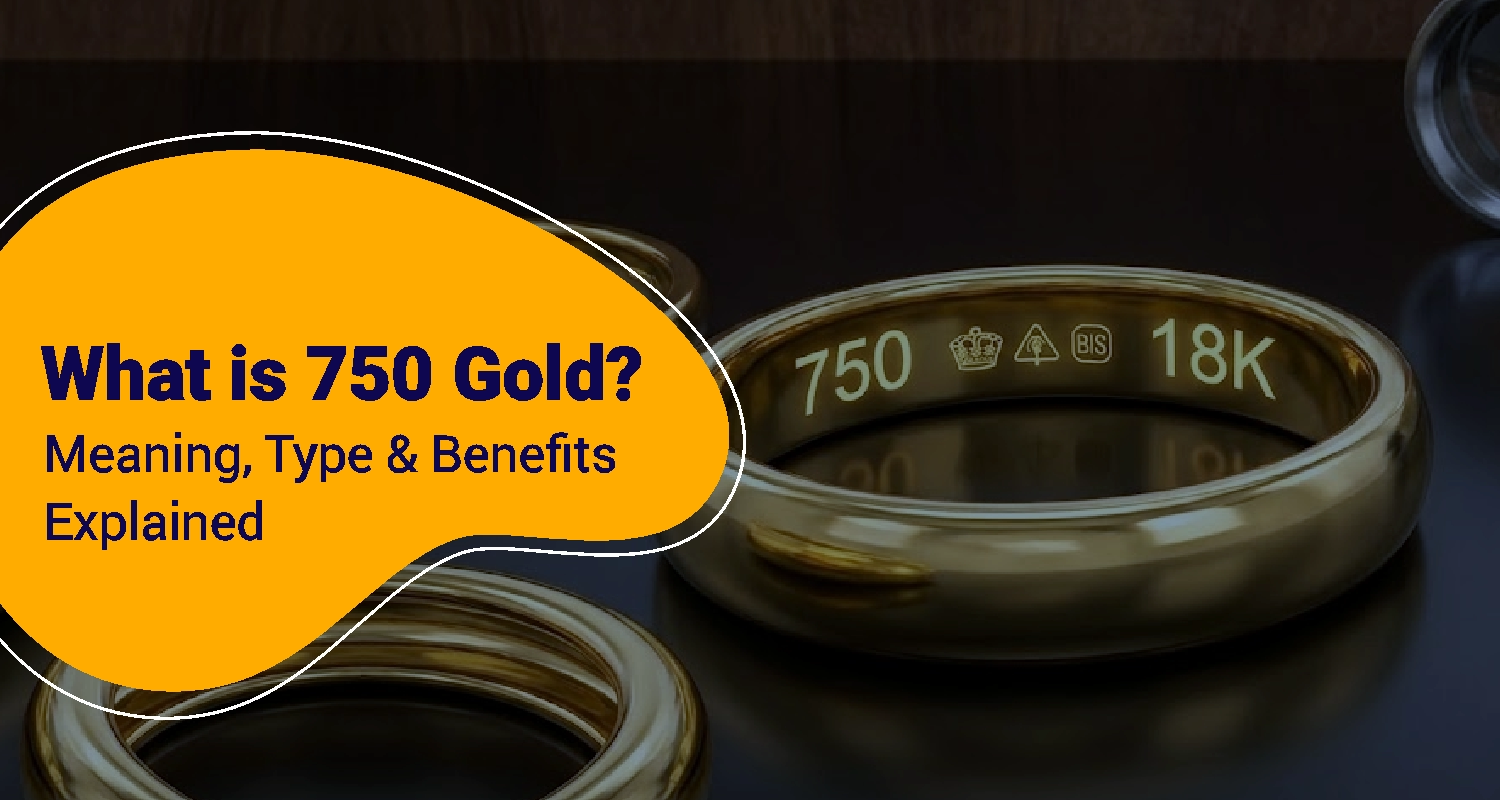
What is 750 Gold? Meaning, Type & Benefits Explained
Table of Contents
Numerical markings that indicate purity are frequently found on gold jewellery, and "750" is one of the most frequently observed stamps. Understanding what 750 gold is helps purchasers assess quality, resale value, and eligibility if they plan to apply for a gold loan. It results in better financial and borrowing decisions. This article discusses what 750 gold means, its karat categorisation, types, and advantages, as well as how this purity level affects pricing, loan eligibility, and repayment conditions when used as collateral.
What is 750 Gold?
750 gold means that the metal is composed of 75% pure gold and 25% alloy metals, such as copper, silver, or zinc, which are added to strengthen pure gold. It is crucial to acknowledge that 750 gold is the global standard for 18-karat jewellery when attempting to define it. The meaning of 750 in gold is associated with "fineness," signifying 750 parts of pure gold out of 1,000, according to a hallmarking perspective.
When comprehending what 750 means on gold purity certification, know that it acts as an authentication standard for lenders and buyers alike. Lenders evaluate this particular purity level during a gold loan appraisal in order to ascertain the jewellery's inherent worth. 750 gold is dependable collateral since it is extremely durable while maintaining a sizable quantity of precious metal content. This has a direct impact on the final loan valuation and the amount of liquidity you may obtain.
Understanding 750 Gold Karat & Hallmarking
The term 750 gold karat refers to the gold purity, in which 18 of 24 parts are made of pure gold - meaning a 75% fineness. Some may use "750 carat gold, but "karat (K)" is the proper technical term for measuring gold purity. "Carat" is used to refer to the weight of gemstones or diamonds. 750 suggests that the metal is a premium alloy appropriate for elaborate jewellery.
In India, jewellery with 750 hallmark goldmeans that it has passed stringent testing and certification by the Bureau of Indian Standards (BIS). As a clear indicator of authenticity, a real hallmark gold 750 stamp shields lenders and purchasers against variations in metal grade and enhances the trust factor when applying for a credit facility. Without requiring intrusive testing, lenders can confirm the gold's worth, giving a quick, transparent, and expert loan approval procedure. A pillar of gold quality assurance, this certification gives you peace of mind and the maximum value for gold* up to 75% LTV based on its confirmed 18K status.
750 Gold Purity Reference Table
The following table clarifies how various hallmark numbers correspond to karat values and purity percentages, facilitating an easier understanding of gold valuation:
|
Hallmark Number |
Karat Value |
Gold Purity % |
|
999 |
24K |
99.9% |
|
916 |
22K |
91.6% |
|
750 |
18K |
75% |
|
585 |
14K |
58.5% |
Types of 750 Gold Jewellery and Usage
Engagement rings, wedding bands, bracelets, and elaborate designer decorations where structural durability is particularly desired are examples of common 750 hallmark gold jewellery designs. Compared to the softer 22K gold, 750 gold is considered as a standard for being more appropriate for everyday use and diamond or gemstone-studded jewellery since it is alloyed with 25% stronger metals like silver, copper, or zinc. The lifetime of priceless items is ensured by this particular composition, which keeps the jewellery from readily warping, bending, or scratching over time.
Because of their steady market value, hallmark gold 750 goods are frequently accepted by lenders for loan facilities. Expert lenders assess the jewellery's gross weight, net gold weight (carefully eliminating stones or enamel), and general condition throughout the inspection. The global standard for high-end luxury and diamond-studded jewellery is 18K gold, hence these products frequently have significant monetary worth.
The most popular uses of 750 gold in the current market are listed below:
- Diamond and Gemstone Settings: The 18K alloy reduces the possibility of loss by providing the hardness needed to keep costly stones securely in place.
- Daily Wear Jewellery: Chains and bangles are commonly fashioned with 750 gold to withstand the wear and tear of daily activities without breaking too readily.
- Luxury Watches: To provide a better surface that is resistant to dents, high-end watchmakers frequently utilise 750 gold for cases and bracelets.
- Designer Ornaments: To preserve their intricate forms, high-end, intricate designs frequently need the structural stability that hallmark gold 750 offers.
- Bridal Jewellery: A lot of contemporary bridal sets use 18K gold to obtain certain hues, such as rose or white gold, while still being long-lasting.
How 750 Gold Purity Affects Your Gold Loan Value
To maximise the liquidity of your assets and determine your eligibility for a gold loan, you must truly understand what 750 gold is. Since 75% of 750 gold karat ornaments are made of pure gold, lenders determine the loan amount by taking into account the metal's net weight, current market rates, and this precise proportion. Although 18K gold is worth less per gram than 22K or 24K gold, which have larger concentrations of precious metal, it is still a very dependable type of collateral.
Your gold's purity level significantly influences your borrowing experience in several ways:
Impact on Appraised Value: When assessing your loan amount, lenders focus on the pure gold content. For example, 18K jewellery contains 75% pure gold. If you pledge 10 grams of 750 (18K) gold, the loan valuation is calculated on 7.5 grams of pure gold after adjusting for purity and deducting any non-gold components.
Impact on Loan-to-Value (LTV) Ratio: Even if the purity is less than 22K, you may still be eligible for financing, subject to lender policies. As per norms issued by the Reserve Bank of India, lenders can provide up to 75% of the assessed gold value, ensuring substantial financial support based on purity-adjusted valuation.
Transparency through Hallmarking: A 750 hallmark indicates 18K purity and serves as an authenticity marker. While lenders still conduct their own purity verification, hallmarking can support a smoother assessment process.
Processing Efficiency: Clearly marked and hallmarked jewellery may help streamline evaluation. However, lenders typically perform standard testing procedures before approval and disbursement.
Repayment and Auction Considerations: Understanding that your gold is 18K helps you estimate its valuation accurately. In rare cases where pledged gold is auctioned due to non-repayment, hallmarked jewellery may offer clearer pricing benchmarks compared to non-certified items.
In summary, 750 gold represents 18-karat composition with 75% purity, making it suitable for durable jewellery. However, from a loan perspective, higher purity gold generally results in a higher eligible value per gram. Identifying hallmark markings supports authenticity and better financial planning.
Understanding your gold’s composition allows you to make informed decisions when applying for a gold loan, ensures transparency during evaluation, and helps you estimate its eligible value more accurately. Leveraging 18K assets can provide liquidity, subject to lender acceptance and purity requirements.
Frequently Asked Questions
What is 750 gold, and how pure is it?
750 gold consists of 75% pure gold and 25% alloys, such as copper or silver. In the fineness system, this is expressed as 750 parts per 1,000. It represents 18-karat gold and offers a practical balance between intrinsic gold value and the durability required for everyday wear.
Is 750 gold the same as 18 karat gold?
Indeed, 750 gold is the same as 18-karat gold. “750” refers to the fineness level (75% pure gold), while “18K” denotes the karatage. Both terms indicate the same purity standard. When pledging such jewellery for a gold loan, the valuation is based on this 75% pure gold content, subject to lender assessment and applicable guidelines.
What does 750 mean on gold jewellery for loan eligibility?
Given that the 750 stamp denotes 75% purity, the item is generally eligible for a gold loan, subject to the lender’s purity requirements. Lenders use this marking as an initial indicator while determining the value based on the net gold weight after assessment. Although purity is still verified through standard testing procedures, hallmarking can support a smoother evaluation process and facilitate quicker disbursement.
Does 750 hallmark gold increase trust during loan appraisal?
A 750 hallmark indicates certification by the Bureau of Indian Standards (BIS), confirming 75% purity. It supports transparency during appraisal, though lenders still conduct their own verification. Hallmarked jewellery may help streamline the assessment process, while interest rates depend on lender policies and eligibility criteria.
Can Hallmark Gold 750 be used for a gold loan in India?
In India, 750 hallmarked gold is widely recognized. Many lenders accept jewellery ranging from 18K to 24K, subject to their individual policies. Using hallmarked 18K gold can support a smoother evaluation process, and once pledged, the gold is stored securely in high-security vaults and released upon full repayment of the loan.
Disclaimer : The information in this blog is for general purposes only and may change without notice. It does not constitute legal, tax, or financial advice. Readers should seek professional guidance and make decisions at their own discretion. IIFL Finance is not liable for any reliance on this content. Read more