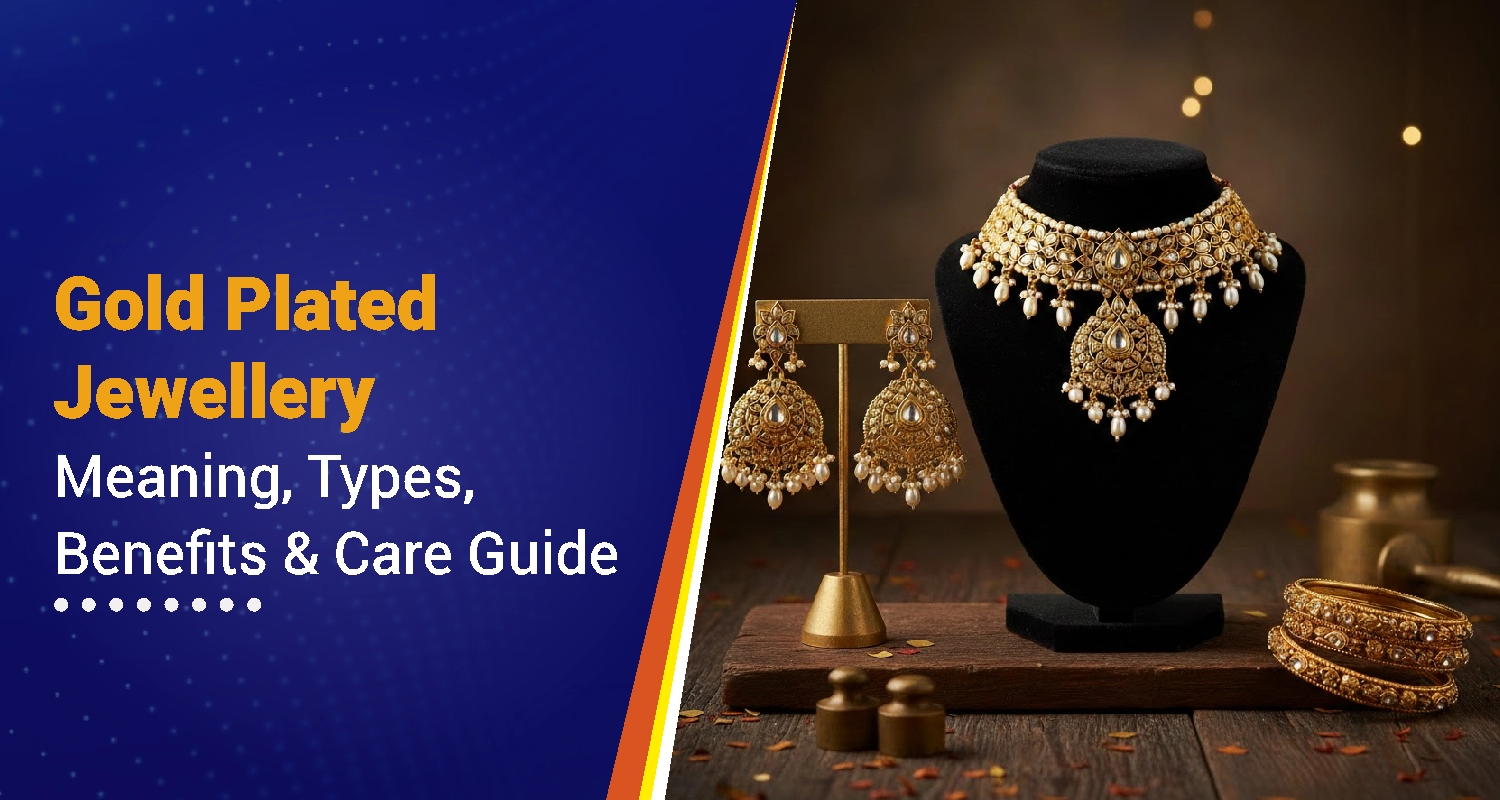
Gold Plated Jewellery – Meaning, Types, Benefits & Care Guide
Table of Contents
Gold plated jewellery offers the charm of real gold at an affordable price. It’s made by coating a base metal with a thin layer of gold, giving it a rich, glossy finish.
What is Gold Plated Jewellery?
If you’ve ever wondered what is gold plated, it simply refers to a jewellery piece made from a base metal coated with a thin layer of real gold.
In short, gold plated jewellery means ornaments that use electroplating to deposit a fine layer of gold over metals like copper, brass, or silver. It offers the same luxurious appearance as solid gold while being lightweight and affordable.
Understanding Gold Plated Jewellery – Key Features
Gold plated jewellery is created by coating a base metal such as copper, brass, or silver with a thin layer of gold through a process called electroplating. The thickness of this gold layer, measured in microns, determines how long the jewellery retains its shine and durability.
Although gold plated jewellery looks almost identical to solid gold, the gold layer can wear off with regular use. It is best suited for occasional or light wear.
Tip: Before buying gold plated jewellery, always check the gold thickness or micron rating. A thicker coating ensures better quality, a longer-lasting shine, and improved resistance to tarnish.
The material enables jewellery makers to create innovative designs while using various metal substrates and fashionable surface treatments at budget-friendly prices. Gold plated jewellery provides luxurious style that people can afford to wear every day through its wide range of elegant chain and statement earring designs. The combination of stylish design and budget-friendly price and easy access makes gold plated jewellery perfect for contemporary fashion enthusiasts.
Difference Between Gold Plated, Gold Filled, and Solid Gold Jewellery
Gold plated jewellery has a thin layer of gold applied over a base metal. It looks elegant and luxurious but can lose its shine with regular use. It is ideal for those who want affordable accessories for occasional wear.
Gold filled jewellery contains a thicker bonded layer of gold compared to gold plated jewellery. This makes it more durable and resistant to fading, giving it a mid-range value. It is often chosen by those who prefer a balance between quality and price.
Solid gold jewellery, on the other hand, is made entirely of pure or alloyed gold. It is highly durable, retains its value, and can be used for investment or gold loans.
|
Type |
Description |
Durability |
Value |
Price Range |
|
Gold Plated |
Thin gold layer on base metal |
Low |
Low |
Most Affordable |
|
Gold Filled |
Thicker bonded gold layer |
Medium |
Moderate |
Mid-Range |
|
Solid Gold |
Pure or alloyed gold |
High |
High |
Expensive |
Types of Gold Plated Jewellery and Common Gold Purities Used
Gold plated jewellery comes in a wide variety of styles and designs. It is created using different base metals such as copper, brass, and silver.
The purity of the gold layer used in gold plated jewellery can vary. Common options include 10K, 14K, 18K, and 24K gold. The higher the karat, the richer and warmer the colour of the plating appears.
In terms of tones, gold plated jewellery is available in yellow gold, white gold, and rose gold finishes. Each tone brings a different appeal, whether you prefer a traditional, modern, or romantic look.
Popular types of gold plated jewellery include rings, earrings, chains, pendants, bracelets, and bangles. From statement designs to minimalist pieces, these ornaments allow wearers to stay fashionable while keeping costs low.
How is Gold Plated Jewellery Made
The production of gold plated jewellery starts with choosing copper or brass or silver as base metals because they provide strong bonding for gold coatings.
The base metal requires complete cleaning and polishing to eliminate all surface contaminants including dirt and oil and impurities.
The jewellery item undergoes a process of electroplating after being submerged in an electrolyte solution that contains gold particles. The gold particles in the solution bond to the metal surface through electroplating when an electric current with controlled voltage is applied. The gold coating process creates a uniform gold layer that covers the entire base material.
Once the gold layer is applied, the jewellery is rinsed, dried, and polished to bring out its final shine.
Advantages of Gold Plated Jewellery
Gold plated jewellery provides an excellent combination of attractive design elements at budget-friendly prices.
- Affordable alternative to solid gold: Since only a small amount of gold is used, gold plated jewellery is budget-friendly and ideal for those who want a luxurious look on a limited budget.
- Lightweight and comfortable: The use of base metals such as copper or brass makes gold plated jewellery light, making it easy to wear for long hours without discomfort.
- Trendy and versatile:Gold plated jewellery is available in countless modern and traditional designs, from minimal chains to bold statement pieces. It can be styled for both daily wear and special occasions.
- Eco-friendly choice: Since it uses less gold, gold plated jewellery helps reduce excessive mining and supports sustainable fashion practices.
- Perfect for gifting or temporary use: For those who like to switch styles often or follow seasonal trends, gold plated jewellery is an ideal choice that combines elegance with practicality.
Disadvantages of Gold Plated Jewellery
While gold plated jewellery is affordable and stylish, it also comes with certain limitations that buyers should be aware of before purchasing.
- Limited durability: The thin layer of gold on gold plated jewellery can wear off over time, especially with daily use.
- Requires regular care: To maintain its shine, gold plated jewellery needs gentle handling and proper cleaning. Harsh chemicals or rough cloths can strip away the delicate gold coating.
- Low resale or loan value: Since the gold layer is minimal, gold plated jewellery has very little intrinsic gold content. It is generally not accepted for gold loans or resale value.
- Possible skin reactions: If the base metal underneath becomes exposed, it may cause irritation or allergic reactions for people with sensitive skin.
How to Care for and Maintain Gold Plated Jewellery
Proper care is essential to keep gold plated jewellery looking as radiant as new.
Avoid exposure to moisture: Keep gold plated jewellery away from water, perfumes, and sweat.
Clean gently: Wipe the jewellery with a soft, lint-free cloth after every use. For deeper cleaning, use mild soap and lukewarm water, then rinse and dry completely.
Store properly: Keep gold plated jewellery in a soft pouch or a dry, separate compartment to prevent scratches and tangling.
Avoid harsh products: Do not use abrasive polishing cloths, chemicals, or strong cleaners, as these can damage the gold layer.
Following these care steps ensures that gold plated jewellery maintains its brightness and remains an elegant part of your collection for years.
Can Gold Plated Jewellery Be Used for Gold Loans
Many people wonder whether gold plated jewellery can be used for gold loans, but the simple answer is no. Financial institutions and lenders do not accept gold plated jewellery as collateral because it contains very little actual gold.
The thin gold layer in gold plated jewellery is mainly decorative and holds no significant monetary value.
Lenders prefer solid gold ornaments because their purity, weight, and value can be easily verified.
If you are planning to take a gold loan, it is always best to use solid gold jewellery.
How to Calculate the Value of Gold Jewellery for Gold Loans
The value of gold jewellery is determined based on three main factors, such as weight, purity, and the current market rate of gold. The general formula is:
Value = Weight × Purity × Current Market Rate
In the case of gold plated jewellery, the gold content is extremely low, making its monetary value almost negligible.
On the other hand, solid gold jewellery holds significant value because its purity can be tested accurately.
For accurate estimates and easy calculations, you can use an online gold loan calculator, such as the IIFL Gold Loan Calculator, to understand how much your solid gold jewellery may be worth.
Frequently Asked Questions
What does 18K gold plated mean?
It means the jewellery is coated with a layer of 18-karat gold over another metal such as copper, brass, or silver. The thickness of the layer determines how long the finish will last.
How long does gold plated jewellery last?
With proper care, gold plated jewellery can maintain its shine for six months to two years.
How can I tell if jewellery is gold plated or solid gold?
To identify gold plated jewellery, check for hallmarking, colour variation, or worn spots revealing the base metal beneath. Solid gold jewellery maintains a uniform colour throughout.
Is gold plated jewellery hypoallergenic?
Not always. Some base metals under gold plated jewellery can cause irritation or allergic reactions once the gold layer fades. Those with sensitive skin should choose pieces that are plated over sterling silver or nickel-free alloys.
Can gold plated jewellery be re-plated once it fades?
Yes. Once the original layer begins to wear off, a jeweller can re-plate it by cleaning the surface and applying a new gold coating using electroplating.
Disclaimer : The information in this blog is for general purposes only and may change without notice. It does not constitute legal, tax, or financial advice. Readers should seek professional guidance and make decisions at their own discretion. IIFL Finance is not liable for any reliance on this content. Read more